By Admin
Content
Shadow suppression is a critical requirement for surgical lighting, directly impacting the surgeon's visual clarity and surgical safety. Operating Light achieves efficient shadow suppression through the following three key technologies:
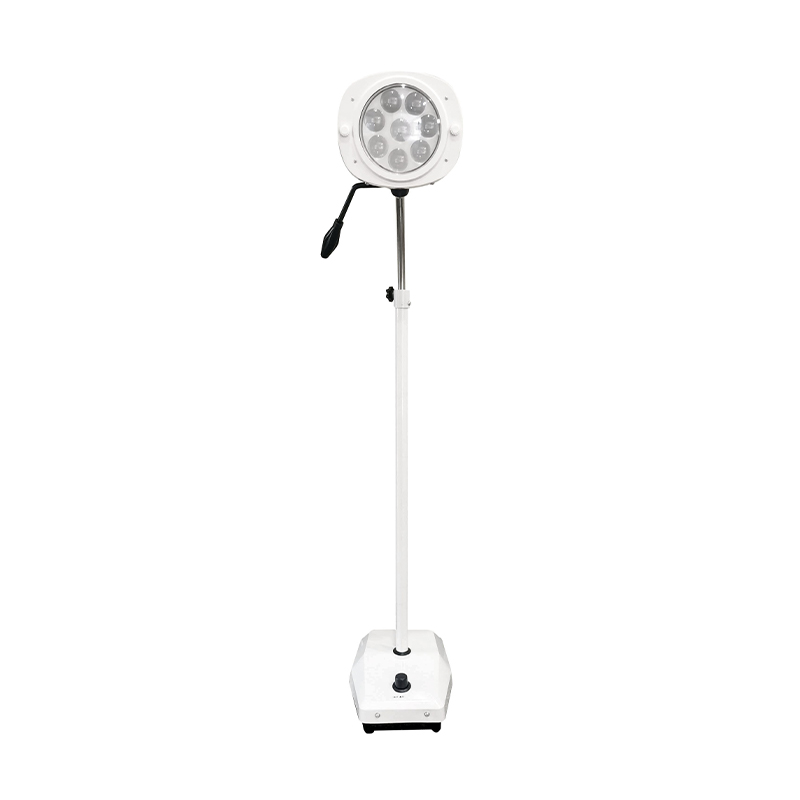
Uses 8-12 high-brightness LEDs arranged in a circular or matrix layout, with light sources intersecting to create a uniform light field.
Each LED's brightness and phase can be independently adjusted, using phase differences to fine-tune the light beam and fill in dark areas caused by surgical instrument obstruction.
A built-in light intensity sensor array monitors illumination uniformity in real time. The system algorithm automatically identifies dark areas and instantly increases the output power of adjacent light sources.
The feedback loop response time is less than 10 ms, ensuring smooth light transitions even when surgical instruments move rapidly.
Uses medical-grade optical lenses to homogenize the light beam, and a micro-scattering layer (such as microporous glass) further diffuses the light, reducing the formation of hard shadows.
This optical combination also increases the penetration depth of the light beam, ensuring sufficient illumination of the surgical site even in deep tissues.
 We have specialised in medical devices for 32 years.
Contact Us
 No 48 Xiaokan Rd, Shizhuang town, Jiangyin, Jiangsu, China
 sara@jsf-qx.com
 +86-18915253915
 +86-18861287595
+86-18915253915
+86-18861287595
+86-18915253915
Copyright @ Jiangyin Jianshifu Equipment Co.,Ltd.
 Custom Disinfection Equipment Manufacturers
China Disinfection Equipment Factory
Custom Disinfection Equipment Manufacturers
China Disinfection Equipment Factory
The information provided on this website is intended for use only in countries and jurisdictions outside of the People's Republic of China.


 English
  عربى
عربى