By Admin
Content
When a 320-bed hospital in Southeast Asia commissioned its new intensive-care wing in late 2025, the infection-control team discovered a familiar problem: the central HVAC delivered only 8 air changes per hour (ACH) in the nurse stations and 6 ACH in the four-bed isolation rooms, while professional guidance recommends 12 ACH for airborne infection isolation. Retrofitting the ductwork would have required US$180,000 and nine weeks of downtime. The hospital instead added supplementary air purification units to each isolation room and the adjacent corridor. The project took 11 days and reached the same effective air quality target. The lesson for facility, infection-control, and procurement teams is straightforward: you do not need to rebuild your HVAC to make a healthcare facility safer — you need the right air filtration solution for each clinical zone.
Healthcare-associated infections (HAIs) affect roughly 1 in 31 hospitalized patients on any given day, according to CDC data. The airborne route carries a substantial share of that burden: Mycobacterium tuberculosis, measles, varicella-zoster, and Aspergillus spores travel on droplet nuclei smaller than 5 µm and can remain suspended for hours. For immunocompromised patients, a single inhaled Aspergillus spore can trigger invasive pulmonary aspergillosis, with mortality rates reported between 30% and 95%.
Professional bodies have therefore published concrete ventilation targets. ASHRAE 170 and CDC guidance set minimum air change rates for clinical spaces: operating rooms 15–20 ACH, airborne infection isolation rooms 12 ACH, protective environments 12 ACH, and general wards 4–6 ACH. Yet many existing facilities — particularly hospitals with HVAC infrastructure from the early 2000s — fall short of those numbers in at least some zones.
| Clinical area | Recommended ACH | Primary function |
|---|---|---|
| Operating rooms | 15–20 | Dilute and remove surgical-site contaminants |
| Airborne infection isolation rooms | 12 | Prevent spread of contagious aerosols |
| Protective environment rooms | 12 | Protect immunocompromised patients |
| General wards and waiting areas | 4–6 | Maintain baseline comfort and hygiene |
The practical conclusion: supplementary air purification with HEPA, UV-C, or plasma units is the fastest and most economical way to reach equivalent air changes in underperforming zones without replacing the central duct system.
The three technologies used in healthcare air purification work on completely different principles, so the choice should begin with the airborne challenge in each zone.
HEPA is the default option for operating rooms, protective environments, and laboratories because it physically captures at least 99.97% of particles at 0.3 µm, and that efficiency can be verified with particle counters. The trade-offs are airflow resistance, periodic filter replacement, and a fan system powerful enough to push air through the media.
UV-C at 254 nm damages the DNA and RNA of bacteria, viruses, and fungi, leaving them unable to reproduce. Because it acts on genetic material rather than physical particles, UV-C disinfects without filtering: particles remain in the air unless a separate mechanical stage captures them. Circulating UV units pass room air through an internal irradiation chamber, so the lamp never exposes patients or staff directly.
Plasma air sterilizers generate a high-voltage discharge that produces reactive ions and free radicals. These species inactivate microorganisms and cause fine particles to agglomerate, making them easier to remove. Plasma units impose almost no airflow restriction and typically operate at 40–50 dB, which is why they fit patient wards and waiting areas better than high-flow HEPA blowers. For a deeper look at the working principle, see our clinical guide to how plasma air sterilizers work in hospital environments.
| Technology | Mechanism | Performance indicator | Typical maintenance |
|---|---|---|---|
| HEPA | Mechanical particle capture | ≥99.97% removal at 0.3 µm | Filter replacement every 6–24 months |
| UV-C | Nucleic acid damage by 254 nm radiation | ≥99.9% microbial inactivation | Lamp replacement every 8,000–12,000 hours |
| Plasma | Reactive ions and free radicals | >90% microbial reduction in pass-through tests | Washable collector plates every 3–6 months |
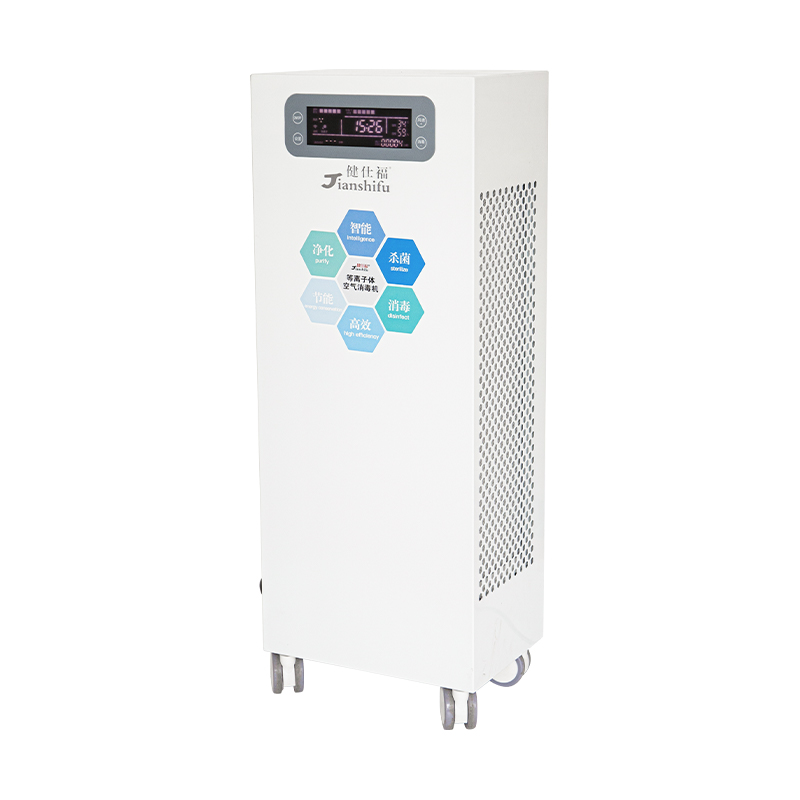 Mobile 100 Plasma Air Sterilizer for Wards and Waiting AreasThis portable plasma unit offers low noise and low power consumption, making it suitable for patient wards and waiting areas where gentle, continuous air cleaning is needed.View Product →
Not every room in a hospital needs the same machine. The selection logic follows the level of procedural risk and the duration of patient exposure: the higher the risk and the longer the stay, the more aggressive the air treatment.
| Clinical zone | Primary risk | Recommended solution | Target ACH |
|---|---|---|---|
| Operating and procedure rooms | Surgical-site contamination | Ceiling-mounted plasma or HEPA with positive pressure | 15–20 |
| ICU and protective environments | Immunocompromised patients | Mobile HEPA or plasma, continuous operation | 12 |
| Airborne infection isolation rooms | Contagious aerosol spread | UV-C or plasma at exhaust, negative pressure | 12 |
| General wards and waiting areas | Cross-patient transmission | Wall-mounted circulating UV-C or plasma | 6–8 |
Ceiling-mounted plasma air sterilizers supplement the surgical HVAC system by adding equivalent air changes at low velocity, limiting turbulence that could disturb the sterile field. They become particularly valuable when the OR air-handling unit cannot deliver its design ACH because of aging filters or duct leakage. Always confirm that the positive pressure between the OR and the corridor is preserved after installation.
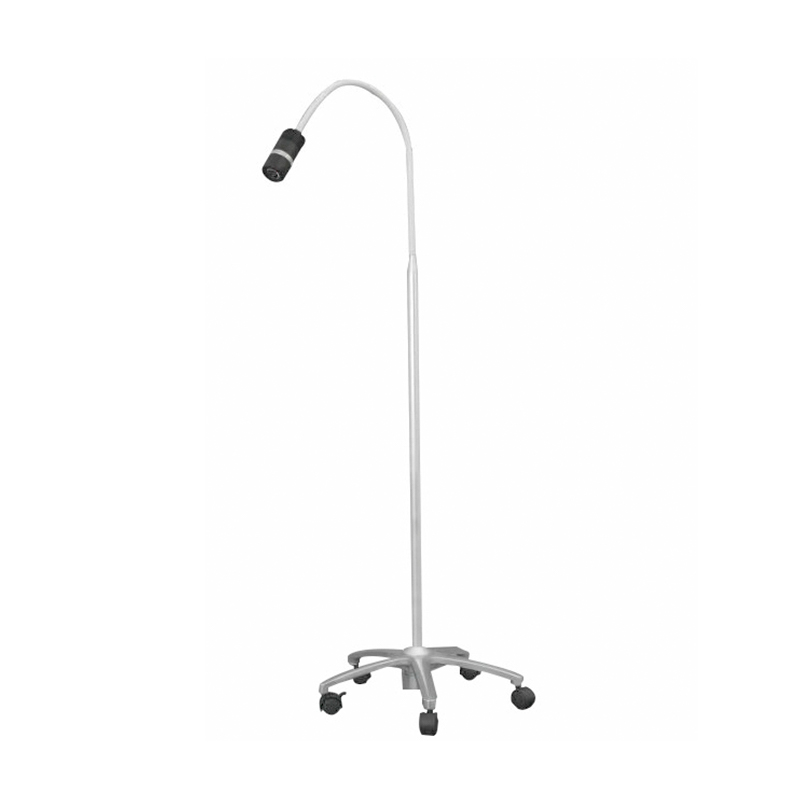
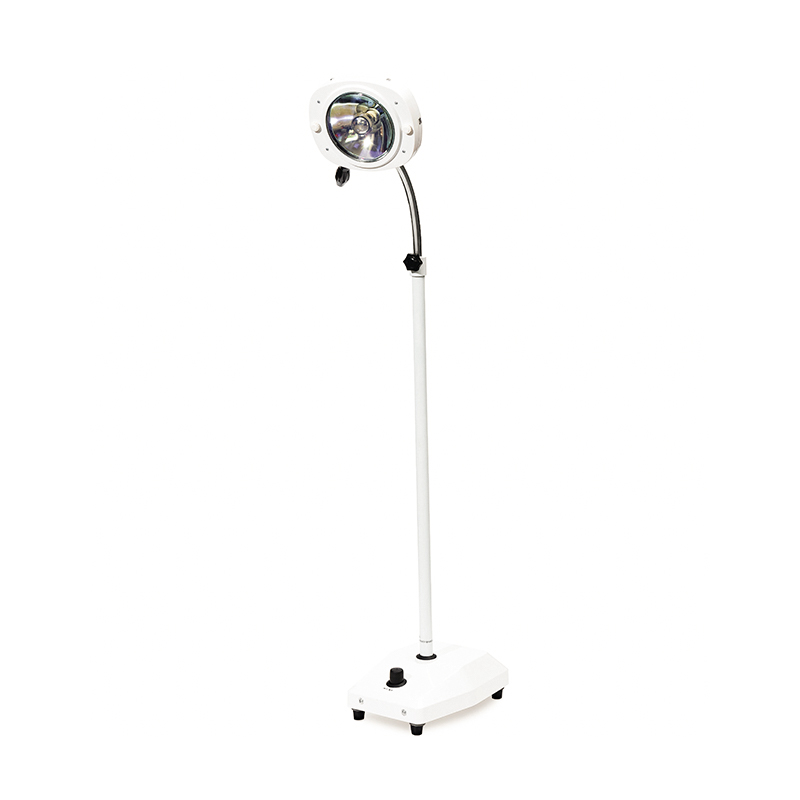
 Ceiling 100 Plasma Air Sterilizer for Operating RoomsDesigned for ceiling mounting in surgical suites, this plasma sterilizer adds low-velocity air changes without disturbing the sterile field, ideal when HVAC performance declines.View Product →
In airborne isolation rooms, directional airflow from the corridor into the room matters more than the filter grade. A mobile HEPA or plasma unit can run near the patient without breaking the pressure gradient, as long as its flow rate stays below the room exhaust capacity. For general wards, a wall-mounted circulating UV air sterilizer draws room air through an internal chamber, providing continuous disinfection with zero direct lamp exposure. Mounted at 2.2–2.5 m above the floor, such a unit typically adds 6–8 equivalent ACH to a standard 30 m² ward bay.
 Wall-Mounted Circulating Purification UV Air SterilizerA space-saving wall-mounted unit with UV disinfection and dual filter screens, providing continuous air cleaning for general wards with automatic lamp status monitoring.View Product →
The appliance with the lowest purchase price often becomes the most expensive solution after two years of consumables, downtime, and staff frustration. Procurement decisions should therefore rest on four predictable criteria rather than initial price alone.
Beyond the hardware, verify the supplier's after-sales structure: response time, spare parts availability, and installation training. For a practical example of how these criteria were applied in a real hospital project, read our case summary on hospital air disinfection with plasma and ultraviolet solutions.
Rolling out supplementary air filtration across a facility is a six-step process that should be documented and repeatable.
Air filtration in healthcare has moved from a building-service footnote to a first-line infection-control measure with measurable clinical and financial outcomes.
Supplementary HEPA, UV-C, and plasma technologies can bring underperforming zones up to the recommended equivalent air changes within days — at a fraction of the cost of HVAC replacement. The winning approach is simple in structure: audit each zone, size the equipment correctly, choose certified products, and verify performance on a schedule. Facilities that follow this discipline see lower infection indicators, higher staff confidence, and fewer procurement surprises.
 We have specialised in medical devices for 32 years.
Contact Us
 No 48 Xiaokan Rd, Shizhuang town, Jiangyin, Jiangsu, China
 sara@jsf-qx.com
 +86-18915253915
 +86-18861287595
+86-18915253915
Copyright @ Jiangyin Jianshifu Equipment Co.,Ltd.
 Custom Disinfection Equipment Manufacturers
China Disinfection Equipment Factory
The information provided on this website is intended for use only in countries and jurisdictions outside of the People's Republic of China.


 English
 عربى