By Admin
Content
Ask any central sterile services supervisor which machine hospital sterilization depends on most, and the answer will be the autoclave. Saturated steam under pressure is the most reliable, fastest, and most reproducible way to kill bacteria, viruses, fungi, and spores in a hospital setting. This guide explains how hospital autoclaves work, what the main cycle types mean, and which factors matter when you buy or operate one.
An autoclave is a pressure vessel designed to sterilize medical devices, surgical instruments, linen packs, glassware, and laboratory media with saturated steam under controlled pressure. In hospitals, it sits at the center of the central sterile services department (CSSD) and acts as the benchmark for every other sterilization technology.
Most hospital autoclaves fall into three physical categories: table-top units for clinics and small departments, vertical units for outpatient use, and horizontal large-capacity units for full CSSD operation. The practical difference is not just chamber size but how air is removed from the chamber and how quickly a load can be turned around.
Steam sterilization transfers a huge amount of heat energy to micro-organisms. When steam contacts a cooler instrument, it condenses and releases latent heat, denaturing proteins and destroying microbial enzymes. That is why moist heat is far more efficient than a hot-air oven: a hospital autoclave can destroy resistant spores in minutes, while dry heat takes hours.
Temperature, gauge pressure, and holding time must be treated as one formula, not three independent settings. The values below are the usual clinical starting points.
| Cycle type | Temperature | Gauge pressure | Minimum holding time | Typical load |
|---|---|---|---|---|
| Gravity displacement | 121°C (250°F) | 15 psi | 30 min | Wrapped instruments, fluids, glassware |
| Pre-vacuum (pulsed) | 132–134°C (270–275°F) | 30–32 psi | 4 min | Wrapped porous sets and instruments with lumens |
| Steam flash | 132°C (270°F) | 30 psi | 3 min | Single unwrapped item in an emergency |
Only items rated autoclavable can be processed this way. Any material that melts, degrades, or traps air is unsafe for steam sterilization and will need low-temperature alternatives.
Steam enters the top of the chamber and pushes air out through a bottom drain. It works well for solid instruments, glass, and fluids, but air pockets can remain inside wrapped sets or long lumens, which makes it less suitable for complex surgical loads.
A vacuum pump removes air before steam is injected. Many pre-vacuum autoclaves add several pressure pulses to force steam in and out of porous materials. This is the standard choice for surgical sets, textiles, and hollow devices.
An unwrapped instrument is exposed to high-temperature steam for a short period when normal turnaround is not possible. It is acceptable only for genuine emergencies, because the item has no protective packaging after the cycle ends.
An autoclave cannot sterilize anything unless the operator prepares the load correctly. Four rules matter more than the machine brand.
Every cycle should leave a trace: physical data, chemical indicators, and biological test results must be logged and retained according to hospital policy.
Most autoclave purchasing mistakes come down to three questions: chamber capacity, steam infrastructure, and long-term service capability. Match the machine to the actual workload, not to the biggest available model.
| Facility type | Typical chamber volume | Recommended cycle type | Main buying factor |
|---|---|---|---|
| Small clinic or office surgery | 20–45 L | Table-top or vertical | Footprint and simple maintenance |
| Outpatient surgery center | 100–200 L | Pre-vacuum, mobile or stationary | Fast turnaround and validation support |
| Full hospital CSSD | 300 L or larger | Horizontal pre-vacuum | Throughput, steam supply, documentation |
Certification is part of the purchase. A hospital-grade sterilizer should be produced under a recognized quality system such as ISO 13485 and meet local medical device regulations. The purchase price is only the first cost; water treatment, periodic validation, test packs, and maintenance commonly exceed the initial price within a few years.
An autoclave solves the instrument problem, but hospital infection control does not stop at stainless steel. Floors, bed rails, handles, air, and the bed unit itself cannot be placed inside a steam chamber. They need a separate workflow.
Surface disinfection in patient rooms is often finished with a mobile ultraviolet trolley after manual cleaning, delivering an extra dose of UV to organisms that remain on exposed surfaces.
 Double-Tube UV Lamp Sterilizer TrolleyUV lamp sterilizer trolley makes sterilization with high strength UV lamp, lamp arm can be adjusted between 0-180° freely.It moves easily,the smart and infrared type h...View Product →
Air is another route an autoclave cannot address. A mobile plasma air sterilizer can be moved into a treatment room or ward between shifts to reduce airborne contamination without sealing the room or stopping clinical work.
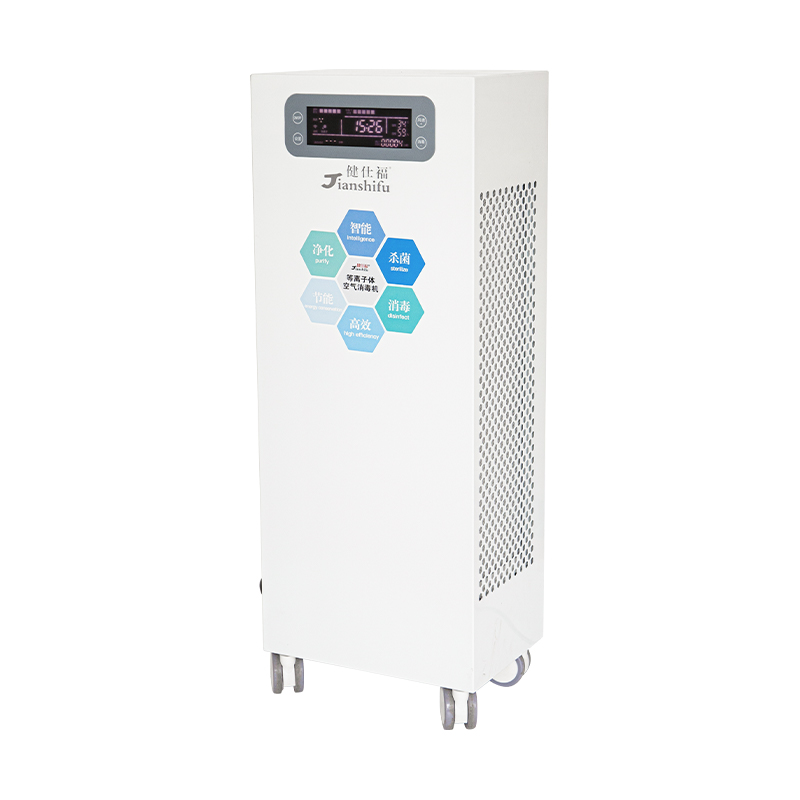 Mobile 100 Plasma Air Sterilizer* Energy-saving and environmental protection: low power consumption design, energy-saving and environmental protection, economical and affordable for long-term use. Th...View Product →
Bed unit hygiene deserves a dedicated process. Mattresses, side rails, and call bells are high-touch surfaces that often escape routine disinfection. The practical guide to bed unit sterilization explains the full process; for bedside terminal cleaning, some facilities add a mobile bed unit sterilizer that treats folded mattress sections directly on the ward.
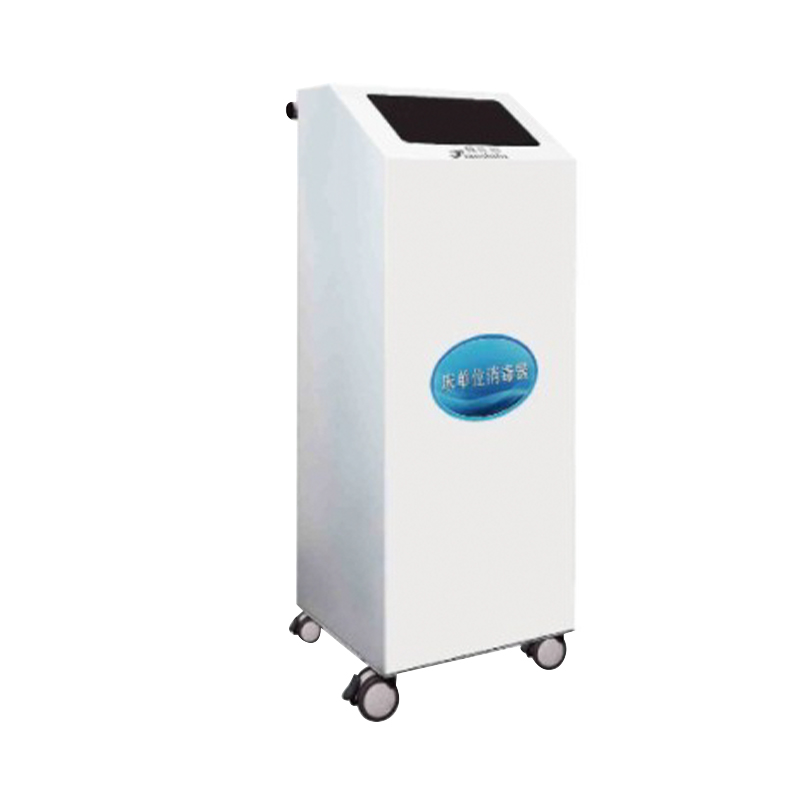 Medical Mobile Bed Unit Sterilizer*Beautiful design and easy to move; *It can osmose the ozone into the bedding, completely disinfect; *High ozone density,long lifetime, efficient disinfection; *Analys...View Product →
An autoclave is not a buy-and-forget asset. The routine checks below are simple but critical for patient safety.
| Check | Frequency | Purpose |
|---|---|---|
| Bowie-Dick test on pre-vacuum units | Daily, first empty cycle | Confirms air removal and steam penetration |
| Biological indicator with Geobacillus stearothermophilus spores | At least weekly | Proves that resistant spores are killed |
| Door gasket and chamber inspection | Daily | Detects steam leaks that cause temperature drops |
| Temperature and pressure calibration check | Quarterly | Ensures gauges match validated sensors |
A failed biological indicator or Bowie-Dick test makes all loads processed since the last passing test unconfirmed. Those loads should be recalled and reprocessed immediately.
Hospital autoclave selection is not about buying the largest chamber. It is about matching capacity, cycle speed, utility supply, and validation support to the real workload. Once the unit is running, disciplined loading, water quality, and routine monitoring protect every instrument set that passes through it. And because steam cannot handle surfaces, air, or bed units, a complete hospital disinfection strategy combines autoclaving with dedicated equipment for every route in the chain.
 We have specialised in medical devices for 32 years.
Contact Us
 No 48 Xiaokan Rd, Shizhuang town, Jiangyin, Jiangsu, China
 sara@jsf-qx.com
 +86-18915253915
 +86-18861287595
+86-18915253915
Copyright @ Jiangyin Jianshifu Equipment Co.,Ltd.
 Custom Disinfection Equipment Manufacturers
China Disinfection Equipment Factory
The information provided on this website is intended for use only in countries and jurisdictions outside of the People's Republic of China.


 English
 عربى