By Admin
Content
At 8:40 in the central sterile supply department, the supervisor opened the incubator and found that yesterday's biological indicator from the steam load had turned yellow. The color change meant bacterial growth — the sterilization cycle had not killed the challenge spores. Within minutes, the load was recalled, the autoclave was taken offline, and the instrument tracking system was opened to trace every set processed since the last negative control.
This scene repeats in hospitals every month. It is not evidence of a bad facility; it is evidence that the facility uses biological monitoring instead of trusting the sterilizer's gauges. Biological indicators remain the most direct, evidence-based measurement of sterility available to infection control teams.
A biological indicator (BI) is a standardized test system containing a known population of highly resistant bacterial spores. For steam sterilization, the reference organism is Geobacillus stearothermophilus; for ethylene oxide and dry heat, it is Bacillus atrophaeus. These spores are deliberately selected because they are far harder to kill than vegetative bacteria, fungi, and most viruses that contaminate surgical instruments.
Most healthcare BIs are self-contained units: a spore carrier sealed in a plastic vial with growth medium and a color indicator. After the sterilization cycle, the user crushes the inner ampoule and incubates the vial. Spore survival changes the medium's color; spore death leaves it unchanged. One test tells you whether the most resistant microorganism in the cycle's intended challenge actually died.
A negative BI corresponds to a sterility assurance level of one in one million — less than one chance in a million that a viable microorganism remains on a processed item. That statistical claim is why regulators and accreditation bodies treat biological indicators as the gold standard for sterilization validation.
Chemical indicators answer a different question. They show that a physical parameter — temperature, time, or sterilant concentration — reached a threshold at their location. They do not show that anything died.
In a wrapped surgical set placed in the coolest corner of a steam chamber, the external chemical tape changes color because the chamber reached temperature, while a BI inside the set may still grow because steam failed to penetrate the package. Chemical indicators validate the process; biological indicators validate the outcome.
International standards make this distinction clear. ISO 11138-1 defines the design requirements for biological indicators, and ANSI/AAMI ST79 recommends testing each steam sterilizer with a BI at least once a week, and preferably in every load containing implants. Facilities that rely on chemical indicators alone cannot prove that a specific cycle reached the biological endpoint.
Matching the BI to your sterilizer is the first decision, because each method requires a different challenge organism and carrier format. The table below summarizes the main configurations used in healthcare processing.
| Sterilization method | Challenge microorganism | Typical format | Incubation |
|---|---|---|---|
| Steam (autoclave) | Geobacillus stearothermophilus | Self-contained vial / spore strip | 55 to 60 °C, 24 to 48 h |
| Ethylene oxide | Bacillus atrophaeus | Spore strip / spore disc | 35 to 37 °C, 48 h |
| Vaporized hydrogen peroxide | Geobacillus stearothermophilus | Self-contained ampoule | 55 to 60 °C, 24 to 48 h |
| Dry heat | Bacillus atrophaeus | Spore strip | 35 to 37 °C, 48 h |
A BI's resistance is expressed by its D-value: the time required at a defined temperature to reduce the spore population by one log. A higher D-value means the BI is harder to kill, so the test is more conservative. When you change cycle parameters or install a new sterilizer, confirm that the selected BI specification remains appropriate for the new cycle conditions.
Facilities that consistently pass audits follow a disciplined sequence for every test:
A negative result is documented as routine. A positive result, however, requires immediate action: take the sterilizer out of service and investigate the cause. Do not simply run the cycle again and hope for a negative. The CDC recommends repeating the BI test in three consecutive empty cycles after the problem is identified; only if all three repeat tests are negative may the sterilizer return to routine use.
Infection control audits repeatedly identify the same kinds of errors. Each one quietly destroys the value of the monitoring program:
Every one of these mistakes has the same net effect: a result that looks reassuring but carries no real information. An invalid BI is worse than no BI, because the team stops looking.
Sterilization monitoring answers one narrow question: did the sterilizer kill the spores? It does nothing for the surfaces, air, and patient furniture between sterilization cycles. A ward bed needs rigorous surface disinfection. An operating room needs air disinfection between procedures. A housekeeping cart carrying non-critical equipment needs UV decontamination on a regular schedule.
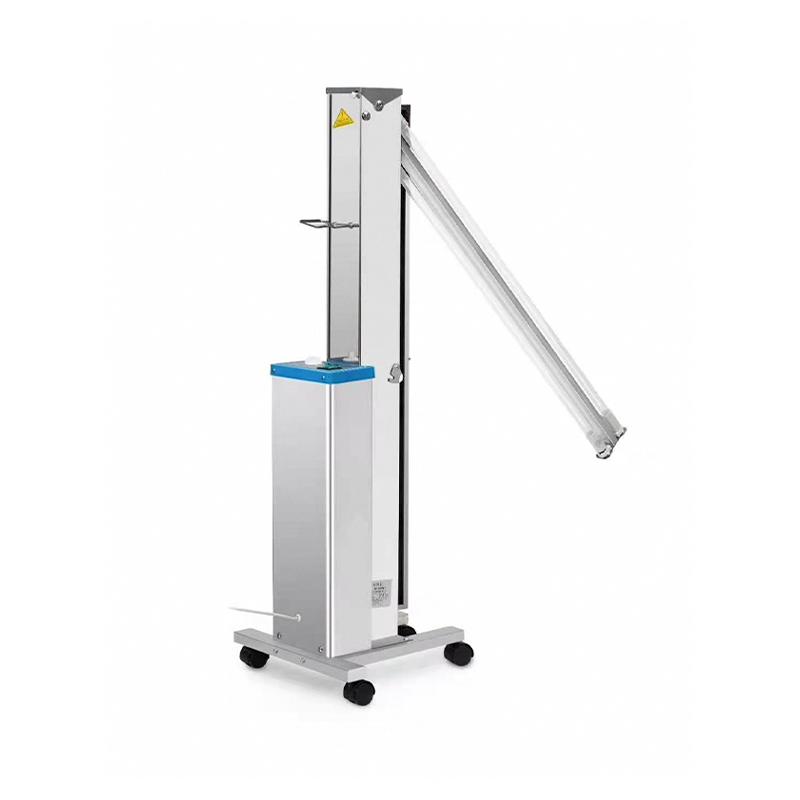 60W Stainless Steel UV Disinfection Trolley for Hospital SurfacesThis UV lamp trolley provides reliable surface disinfection for wards, examination rooms, and patient transport equipment between sterilization cycles, with adjustable lamp arms and corrosion-resistant stainless steel construction.View Product →
This is where a manufacturer's perspective helps. Facilities that run disciplined biological monitoring tend to choose their surface and air disinfection equipment with the same rigor. Our stainless steel UV disinfection trolley, for example, is built for repeated daily cycles through wards, examination rooms, and patient transport equipment. For air handling, our mobile plasma air sterilizer delivers a rated disinfection volume per hour — a measurable parameter that fits the same documentation culture as BI logs.
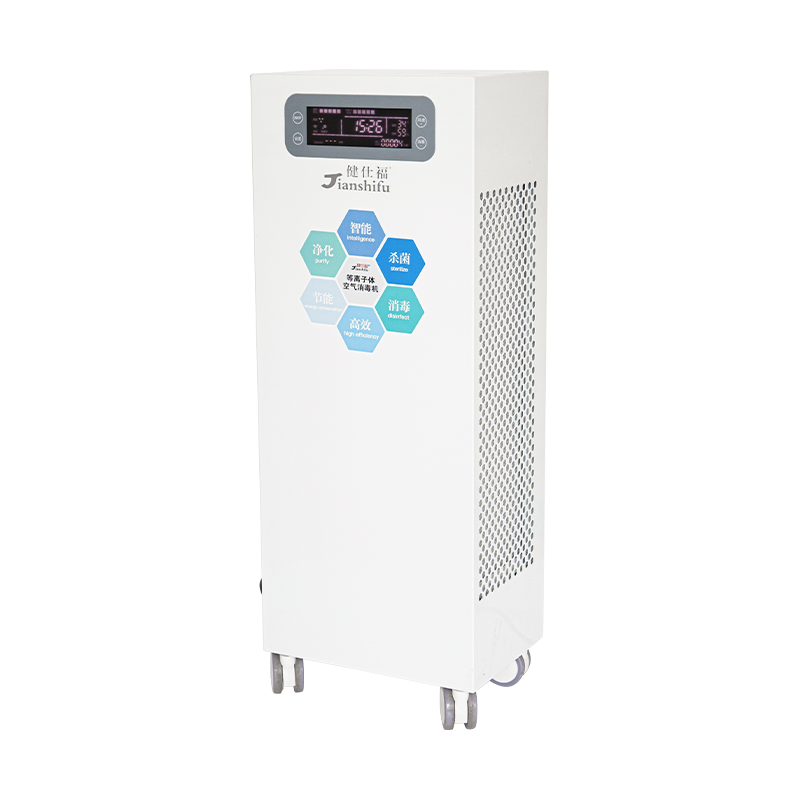 Mobile Plasma Air Sterilizer with Rated Disinfection VolumeThis mobile air sterilizer delivers a measurable disinfection volume per hour, making it suitable for operating rooms and other clinical areas that require documented air quality alongside biological monitoring logs.View Product →
Bed units are the clearest example. The frame, mattress, and side rails are touched by every patient and caregiver and are difficult to disinfect by hand. A medical mobile bed unit sterilizer automates that cycle for the patient environment, complementing rather than replacing the sterilization monitoring that protects surgical instruments. If you are writing a complete infection control policy, our practical guide to bed unit sterilization walks through the difference between cleaning, disinfection, and the documentation an auditor expects to see.
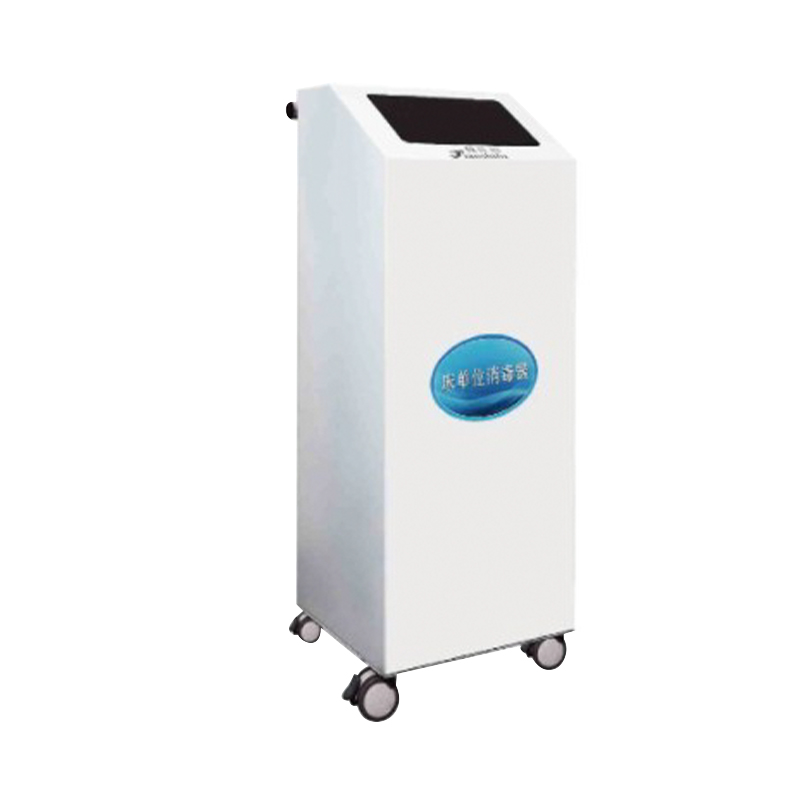 Medical Mobile Bed Unit Sterilizer for Automated Patient Bed DisinfectionThis bed unit sterilizer automates disinfection of bed frames, mattresses, and side rails using ozone penetration, complementing sterilization monitoring and providing verifiable documentation for infection control audits.View Product →
None of these devices replaces biological indicators. They close the loop around them: instruments are sterilized and verified with spore testing; the patient environment is disinfected on a schedule that is equally verifiable, giving infection control teams documented confidence at every layer.
Biological indicators deliver value only when the program around them is disciplined. Choose the right BI for each sterilizer, place it where the cycle struggles most, incubate it with a positive control, read it on time, and record every result. A positive result is not a failure — it is early warning before a patient is harmed.
When reviewing your infection control workflow, start with the sterilization loop, then audit the surface, air, and patient-area disinfection layers that sit between sterilization cycles. If you want a manufacturing perspective on how that equipment is specified, the full disinfection equipment range is organized by application, so comparing formats, capacities, and verification methods is straightforward.
 We have specialised in medical devices for 32 years.
Contact Us
 No 48 Xiaokan Rd, Shizhuang town, Jiangyin, Jiangsu, China
 sara@jsf-qx.com
 +86-18915253915
 +86-18861287595
+86-18915253915
+86-18861287595
+86-18915253915
Copyright @ Jiangyin Jianshifu Equipment Co.,Ltd.
 Custom Disinfection Equipment Manufacturers
China Disinfection Equipment Factory
Custom Disinfection Equipment Manufacturers
China Disinfection Equipment Factory
The information provided on this website is intended for use only in countries and jurisdictions outside of the People's Republic of China.


 English
  عربى
عربى