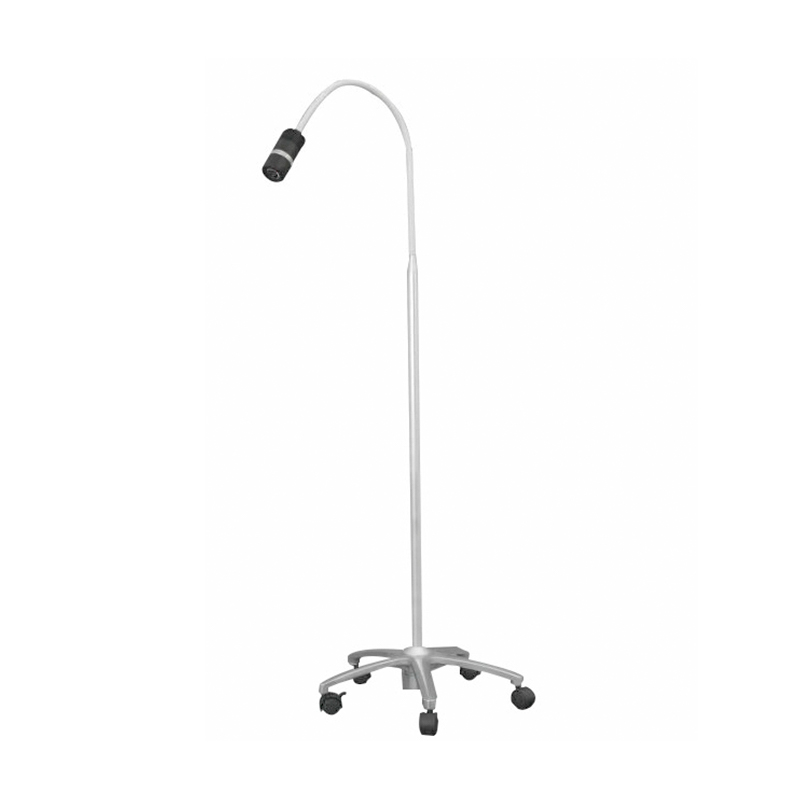
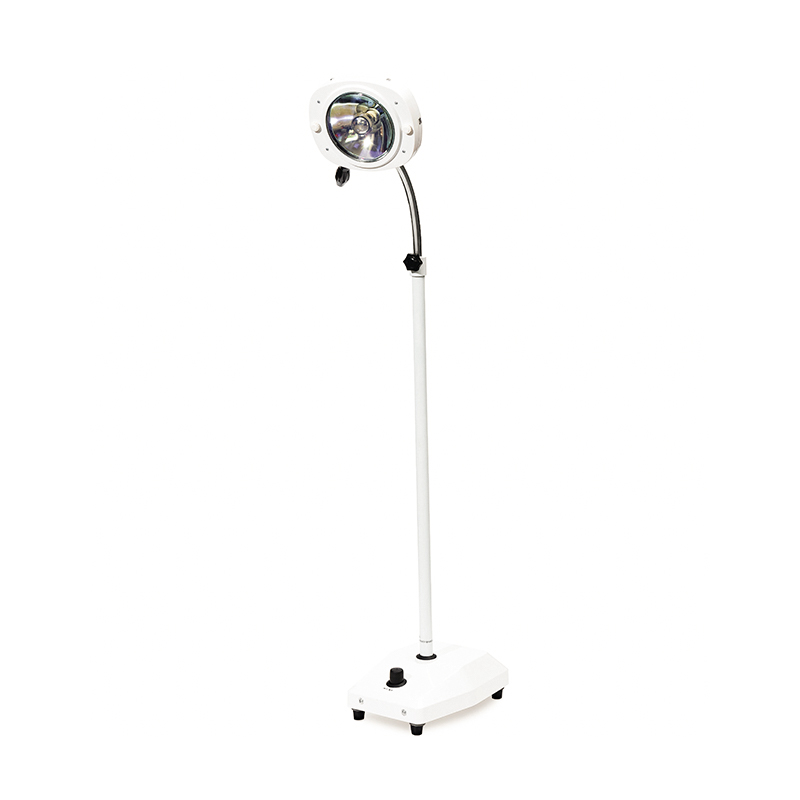
By Admin
Content
A 200-bed general hospital usually runs four separate disinfection streams at once: air, hard surfaces, bed units and water. Each one is specified by a different department, bought against a different standard and judged with different numbers. That is the most useful fact about hospital disinfection products — they are not one category.
Treat them as one category and two things happen. You overpay for the stream nobody is measuring, and you under-specify the stream that the infection-control committee actually audits. The order that works is medium first, then certificate, then price. Buyers who reverse it end up with a UV trolley sized for a 20 m² treatment room standing in a 60 m² ward.
Every hospital disinfection product sits in a supply chain built around a medium. Air handling equipment is evaluated on treated volume and air changes. Surface equipment is evaluated on irradiance at a working distance, or on contact time for a chemical. Bed unit sterilizers are evaluated on cycle volume and seal integrity. Water sterilizers are evaluated on flow rate against lamp power.
| Stream | Typical product form | Decisive specification | Where it usually fails |
|---|---|---|---|
| Air | Plasma or UV air sterilizer, wall, ceiling or mobile | Treatable room volume and air changes per hour | Sized for an empty room rather than a full ward round |
| Surfaces | UV lamp trolley, single, dual or four tube | Irradiance at working distance and dose time | Shadowing behind bed rails and equipment |
| Bed units | Mobile bed unit sterilizer | Cycle volume and seal integrity | Torn mattress covers and overloaded cycles |
| Water | UV water sterilizer, 6 W to 165 W | Flow rate against lamp power and contact time | No pre-filtration, so quartz sleeves foul early |
The practical consequence for a procurement team is that a single supplier covering three of the four streams removes three rounds of supplier qualification. That saving is real, but only if the supplier's certificates carry the right scope for each product family.
Air sterilizers come in three mounting forms for a reason. Wall-mounted units suit consultation rooms and corridors where floor space is contested. Ceiling units suit procedure rooms and any space where a wall position would sit inside the patient zone. Mobile units with castors move between rooms on a cleaning round, which is why models carrying a 100, 120 or 150 designation exist — the number reflects capacity, not quality.
Two decisions drive the outcome. The first is occupied versus unoccupied operation. A plasma unit that runs continuously during a ward round is solving a different problem from a UV unit that runs at night with the room locked. The second is maintenance access: a ceiling unit with a filter that needs a ladder and a work order will be serviced late, and a late filter turns a good specification into a bad installation.
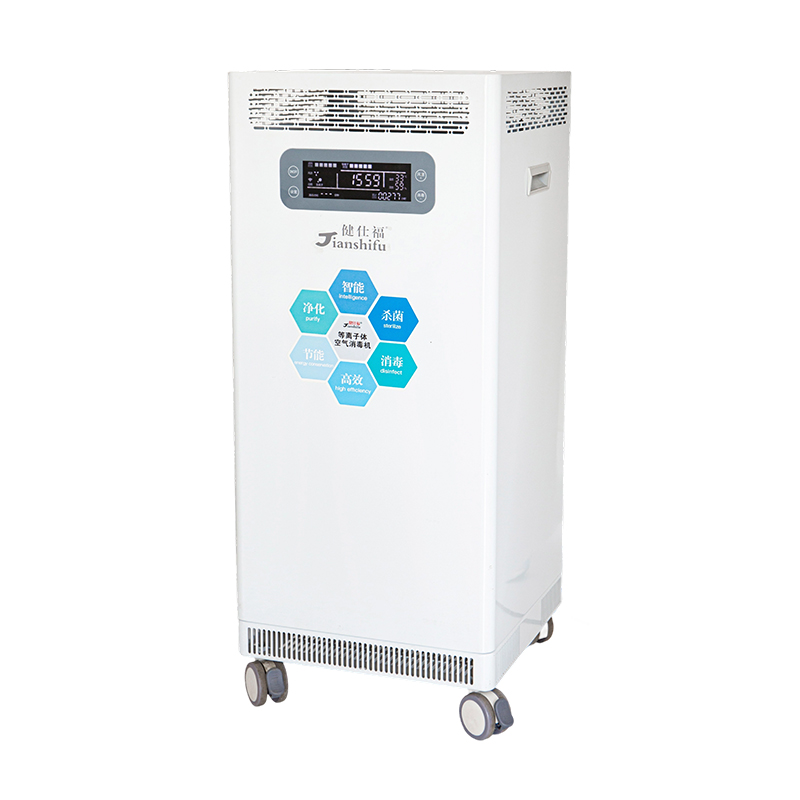 Medical Mobile Plasma Air Disinfection MachineMobile plasma air disinfection unit for indoor spaces; check its published noise figure and maintenance access for ward use.View Product →
For low-noise requirements — night wards, neonatal areas, quiet clinics — check the published noise figure rather than assuming it. A wall-mounted unit marketed for low noise in a shared corridor is often the compromise that keeps a ward compliant without shutting it down.
The bed unit is where hospital disinfection products most often go unmanaged. The mattress, the frame and the pillow sit between two patients for twenty minutes, and the responsibility for cleaning them is split between nursing and housekeeping. A mobile bed unit sterilizer solves the technical problem by enclosing the mattress and running a defined cycle; it does not solve the ownership problem.
What to check before purchase: the maximum mattress dimensions the hood or bag accommodates, the number of cycles per charge or per hour, and what the manufacturer states about cover condition. A cracked mattress cover stops the cycle from working regardless of how good the machine is. Buyers who want the operational detail will find it in this bed unit sterilizer operation guide, which walks through the cycle from preparation to release.
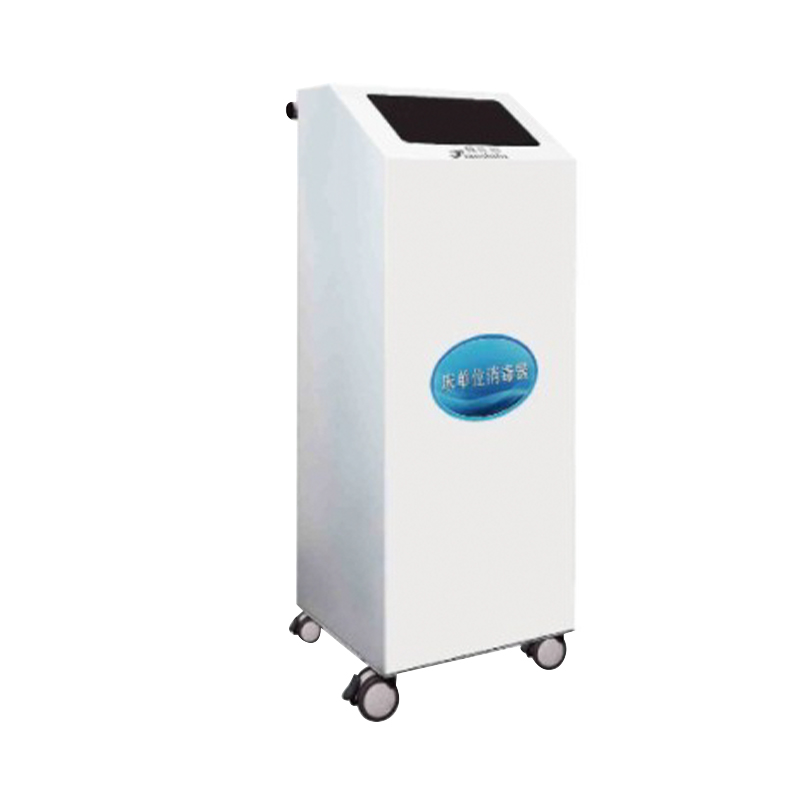 Mobile Ozone Bed Unit SterilizerMobile ozone bedding disinfection unit can treat two beds at once, supporting faster turnaround on admission-heavy days.View Product →
A second, quieter benefit is turnaround. A dedicated bed unit cycle typically finishes faster than stripping a mattress and sending it to a central decontamination point, which matters on admission-heavy days.
UV surface disinfection fails for three predictable reasons, and none of them is a defective lamp. Irradiance drops sharply with distance, so a trolley placed in the doorway of a side room does not disinfect the far wall. Shadows protect anything behind a bed rail, a drip stand or an over-bed table. And lamp hours are not tracked, so output decays quietly below the level assumed in the procedure.
The hardware options map onto those problems. Single-tube stainless steel trolleys suit small rooms and quick passes. Dual-tube and four-tube units shorten the dose time in larger spaces. U-shaped 80 W and 150 W vertical carts place the tubes around the load rather than beside it, which reduces shadowing on bulky equipment.
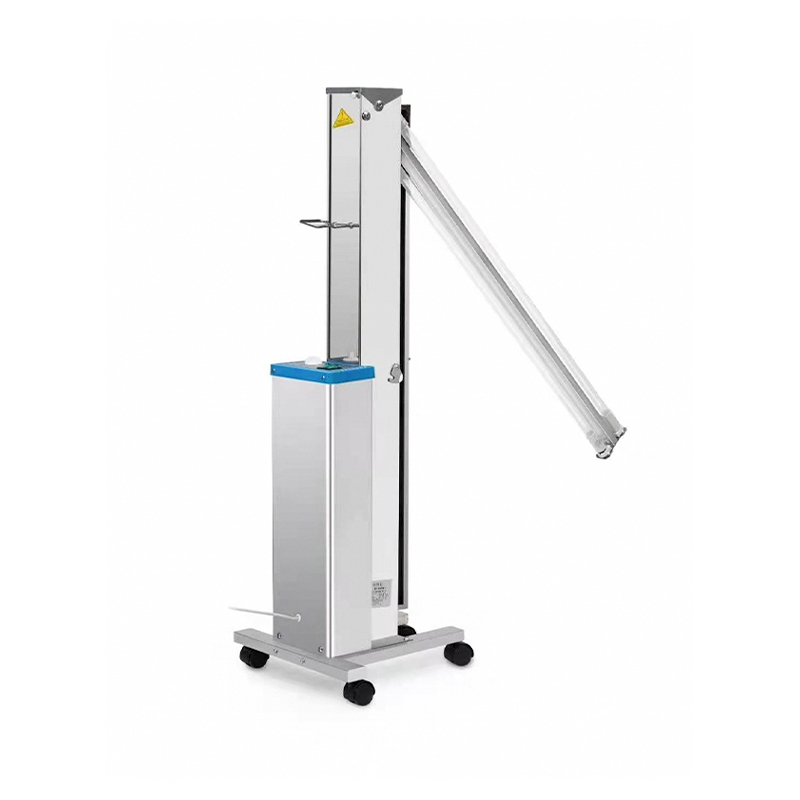 Stainless Steel UV Lamp Sterilizer TrolleyDouble-tube stainless steel UV trolley with adjustable lamp arm and shockproof wheels; suited to quick disinfection in small rooms.View Product →
No device programme removes the need for liquid disinfectants. Quaternary ammonium compounds remain popular because they are low-corrosion and low-odour, but their sporicidal activity is limited. Hypochlorite is broad-spectrum and cheap, and it attacks stainless steel and polymer housings with equal enthusiasm. Peracetic acid is fast and sporicidal, and aggressive to metals. Accelerated hydrogen peroxide sits in the middle and costs more. Phenolics carry residue and toxicity questions that make them a harder sell in patient areas.
The overlooked issue is compatibility between the chemical programme and the equipment programme. Repeated hypochlorite contact crazes polycarbonate lamp housings and hardens mattress covers; residues left in a room before a UV cycle can also deposit on quartz sleeves and reduce output. Procurement should request a written list of approved cleaning agents for every device housing and cover, and should test one unit before rolling out a new chemical across a ward.
Most hospital disinfection product disputes are documentary rather than technical. The equipment performs; the paperwork does not match the delivered model. Run this table against the quotation before the purchase order goes out.
| Checkpoint | Evidence to request | Failure it prevents |
|---|---|---|
| Quality system scope | ISO 13485:2016 certificate with product scope | Certificate covering an unrelated product family |
| Electrical safety | Model-specific test report and CE documentation | Family certificate accepted in place of model data |
| Ozone and emissions | Written emission statement for the exact unit | Ozone odour in occupied rooms after install |
| Spare parts | Lamp, filter and fuse part numbers with lead time | A unit idle for a full quarter awaiting a lamp |
Model families matter more than brochures suggest. A manufacturer that builds the same disinfection device across several mounting forms and capacities has already resolved the awkward questions — how the housing is sealed, how the lamp is replaced, which spare fits which model. That is a procurement advantage, because a wall unit, a ceiling unit and a mobile unit from one matrix share service logic and consumables.
Jiangyin Jianshifu Equipment Co., Ltd has operated in Jiangyin, Jiangsu since 1993 and builds across exactly that kind of matrix: plasma air sterilizers in mobile 100, 120 and 150 versions plus wall and ceiling 100 versions; UV air sterilizers in mobile, circulating wall, intelligent wall and low-noise wall forms; UV trolleys from 60 W stainless steel through dual and four tube to U-shaped 80 W and 150 W; UV water sterilizers from 6 W to 165 W; single and multi-head operating lights; examination lamps from 3 W to 35 W; infrared therapy lamps; and electric suction apparatus. The company states ISO 9001:2015, ISO 13485:2016, CE and RoHS certification, and describes ERP-supported supply and a dedicated after-sales team.
For a distributor or hospital group buying across several departments, the value is fewer qualification files and one consumable schedule. Buyers can review the full disinfection equipment range and check whether the mounting forms needed by each department exist inside one supplier's catalogue before opening a second one.
If there is one sentence worth carrying into the next tender, it is this: specify the medium, then the room, then the certificate, and leave the price comparison for last. A cheap UV trolley that shadows half a ward is more expensive than a correctly sized plasma unit, and a bed unit sterilizer without a cover inspection step is a machine that reassures an auditor while leaving the mattress unchanged.
 We have specialised in medical devices for 32 years.
Contact Us
 No 48 Xiaokan Rd, Shizhuang town, Jiangyin, Jiangsu, China
 sara@jsf-qx.com
 +86-18915253915
 +86-18861287595
+86-18915253915
Copyright @ Jiangyin Jianshifu Equipment Co.,Ltd.
 Custom Disinfection Equipment Manufacturers
China Disinfection Equipment Factory
The information provided on this website is intended for use only in countries and jurisdictions outside of the People's Republic of China.


 English
 عربى