By Admin
Content
An examination lamp is a dedicated medical lighting device used to illuminate the human body during clinical assessment, diagnosis, and minor procedures. Its primary purpose is to provide bright, shadow-free, color-accurate light precisely where a clinician needs it—without introducing heat, glare, or distortion that would compromise diagnostic accuracy. From general practice consultations to emergency triage and specialist examinations, the examination lamp is a foundational tool in virtually every patient-facing healthcare setting.
Unlike overhead room lighting, a properly specified examination lamp delivers illuminance levels between 1,000 and 10,000 lux at the target surface, enabling clinicians to detect subtle color changes in skin and tissue, assess wound depth, and evaluate anatomical structures that would be invisible under standard ambient light.
The most fundamental use of an examination lamp is supporting the routine physical examination performed in outpatient clinics, general practice rooms, and hospital wards. During a standard consultation, a clinician uses the lamp to:
A color rendering index (CRI) of 90 or above is the accepted benchmark for clinical examination lamps, ensuring that tissue color—particularly the subtle yellow tones of early jaundice or the pale pink of anemia—is rendered faithfully and not distorted by the light source.
Examination lamps are essential equipment in gynecology and obstetrics departments. They provide the directed, high-intensity illumination required for:
Lamps used in these settings are typically mounted on articulated floor stands or ceiling-mounted arms to allow precise repositioning without requiring the clinician to release the sterile field.
In wound management and procedure rooms, examination lamps serve a critical role in supporting accurate assessment and safe intervention. Key uses include:
Accurate classification of wound depth, tissue viability, and infection signs requires illuminance levels that reveal subtle color differences between necrotic tissue, granulation tissue, and healthy skin. Examination lamps achieving 3,000–5,000 lux at 50 cm working distance are standard in wound care units.
Procedures such as incision and drainage of abscesses, foreign body removal, skin biopsy, and suturing of lacerations are routinely performed under an examination lamp in emergency departments and outpatient settings. The lamp must deliver shadow-free illumination across the entire operative field—typically 15–25 cm in diameter—to enable precise instrument placement.
Nurses performing complex dressing changes or stoma assessments use examination lamps to clearly visualize peri-wound skin condition, moisture levels, and early signs of pressure injury, ensuring timely clinical intervention.
Examination lamps in neonatal and pediatric units must balance adequate illuminance with strict control of radiant heat output. LED-based examination lamps have largely replaced halogen models in these settings because they produce the same luminous output with significantly less infrared radiation—an important safety factor when examining premature infants or newborns with immature thermoregulation.
Specific neonatal uses include:
Dermatologists rely on examination lamps not only for general illumination but also for specialized diagnostic lighting techniques. A high-CRI examination lamp with adjustable color temperature—typically switchable between 4,000 K (neutral white) and 6,500 K (daylight)—allows clinicians to assess:
Some examination lamps designed for dermatology incorporate a Wood's lamp (UV-A at 365 nm) mode, enabling fluorescence-based diagnosis of fungal scalp infections, erythrasma, and porphyria without requiring a separate instrument.
In emergency and urgent care settings, examination lamps must perform reliably across a wide range of unplanned clinical scenarios. Their uses in the emergency department include:
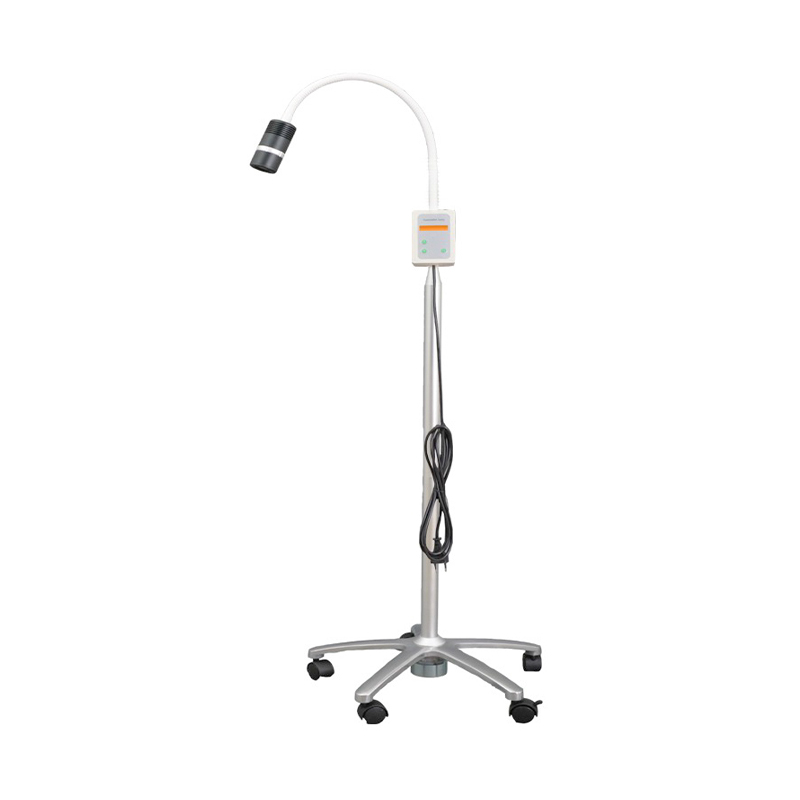
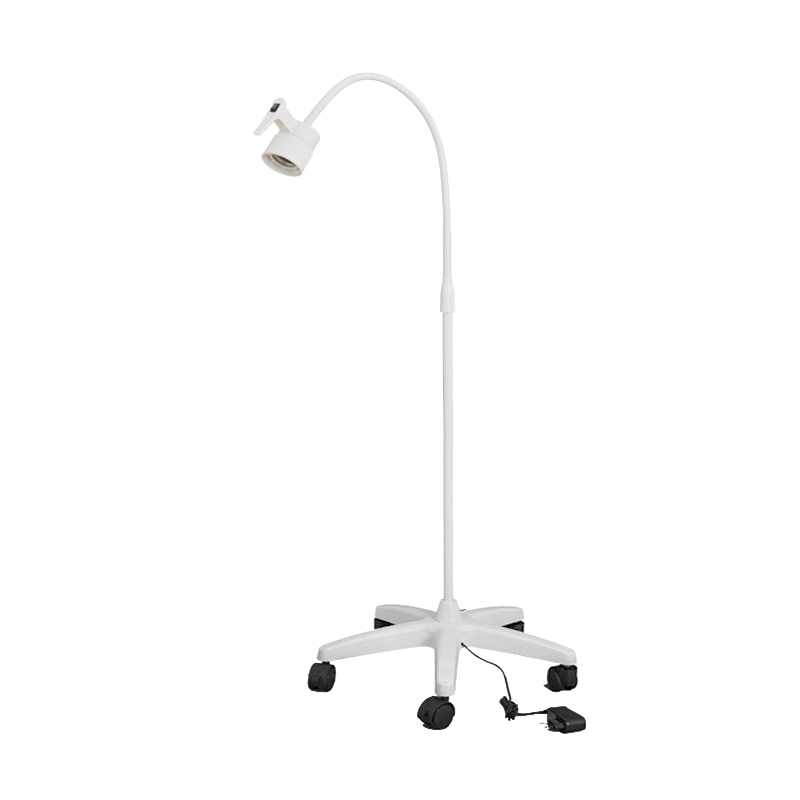
Mobile examination lamps on castored floor stands are the preferred format in emergency departments due to their immediate repositioning capability across multiple bays without fixed installation.
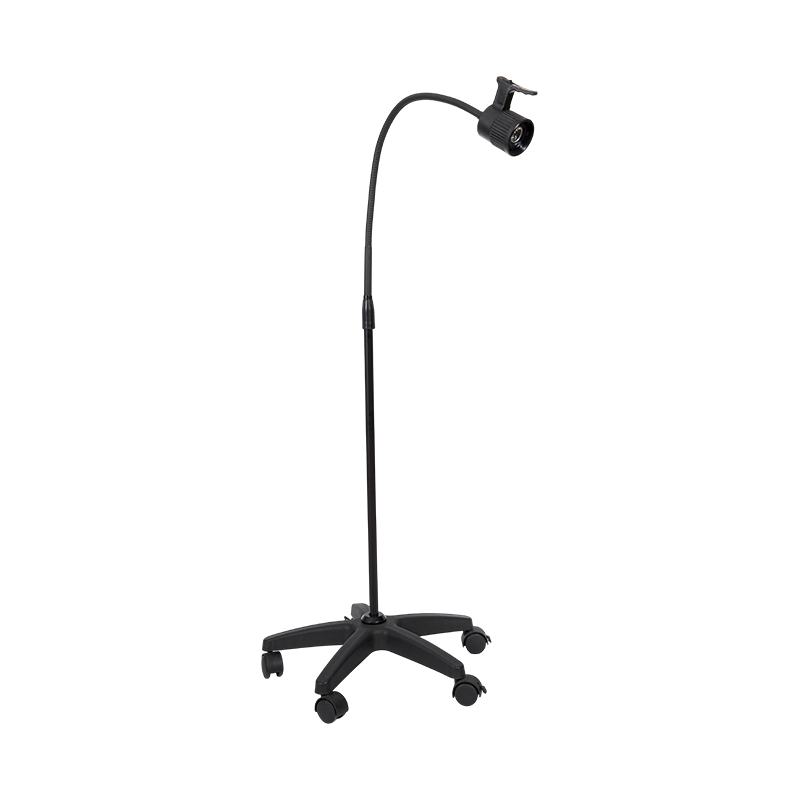
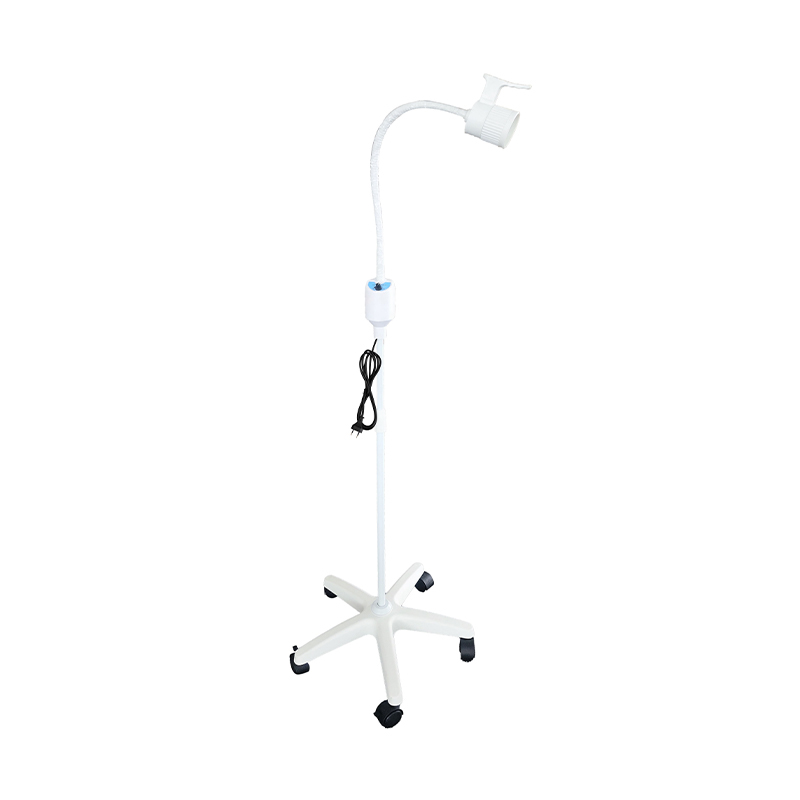
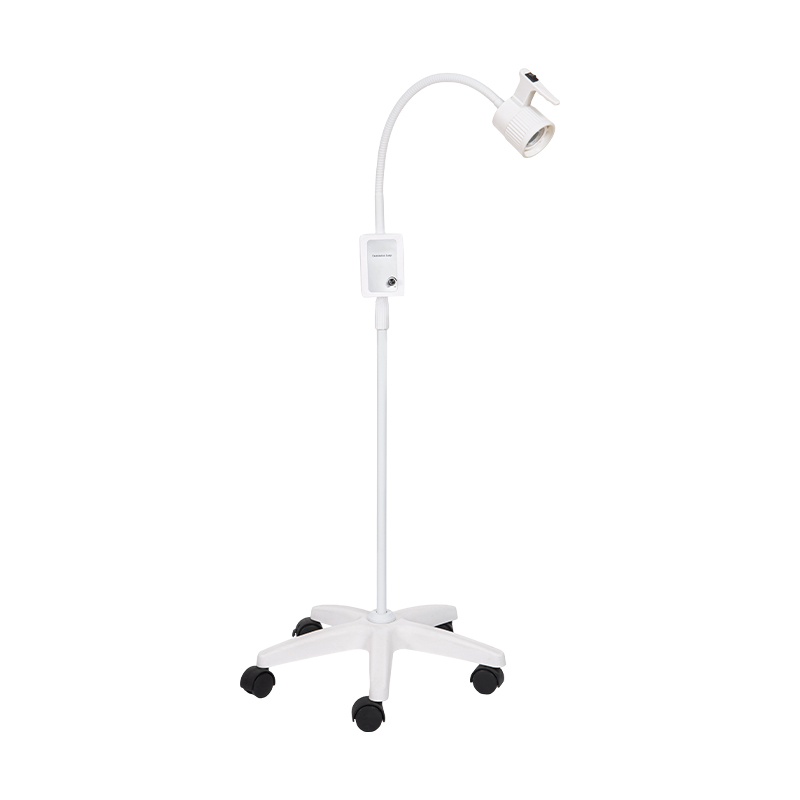
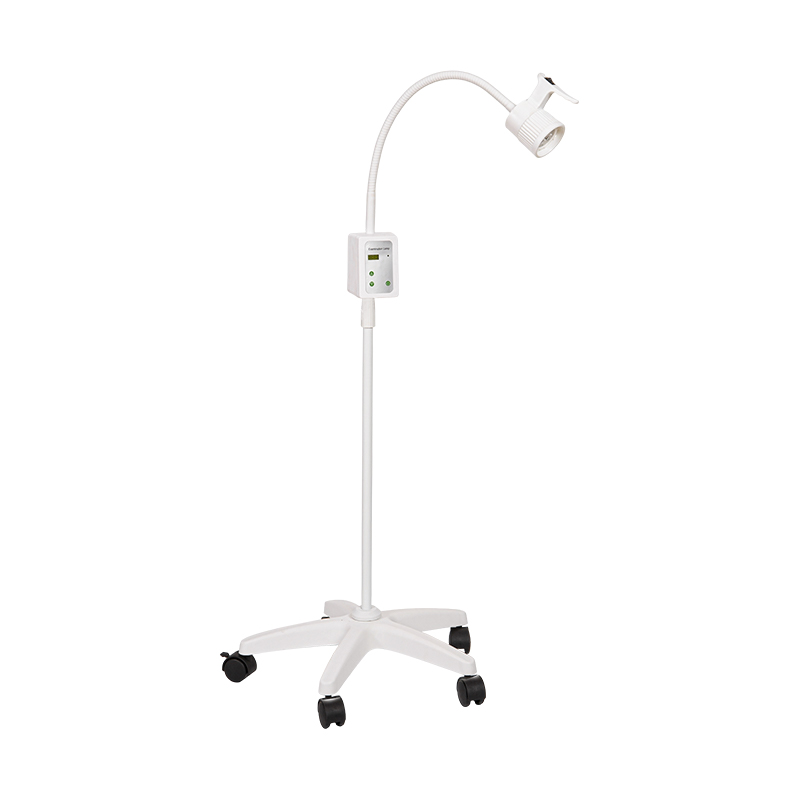
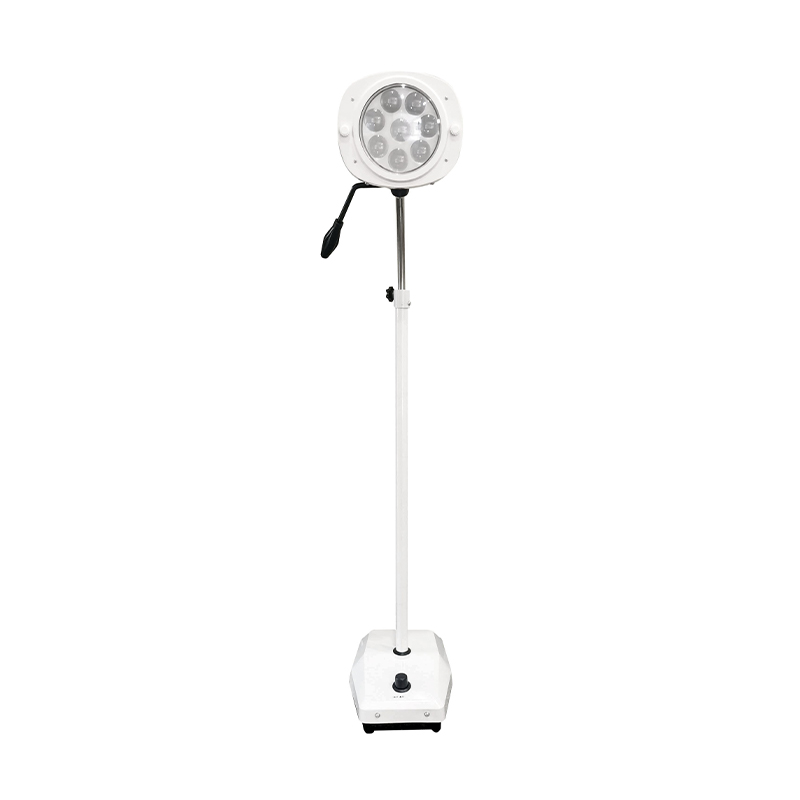
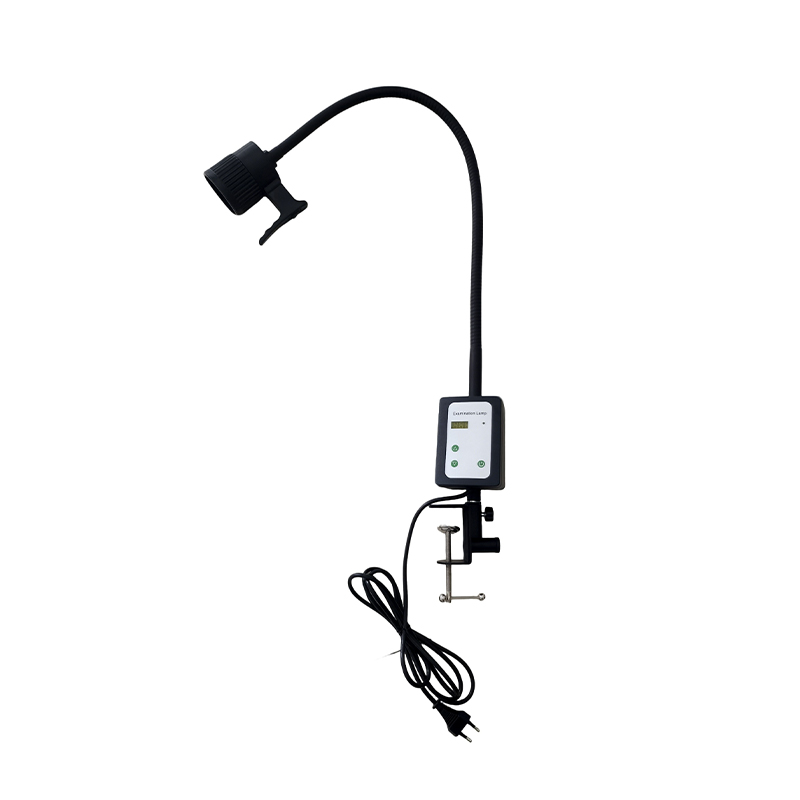
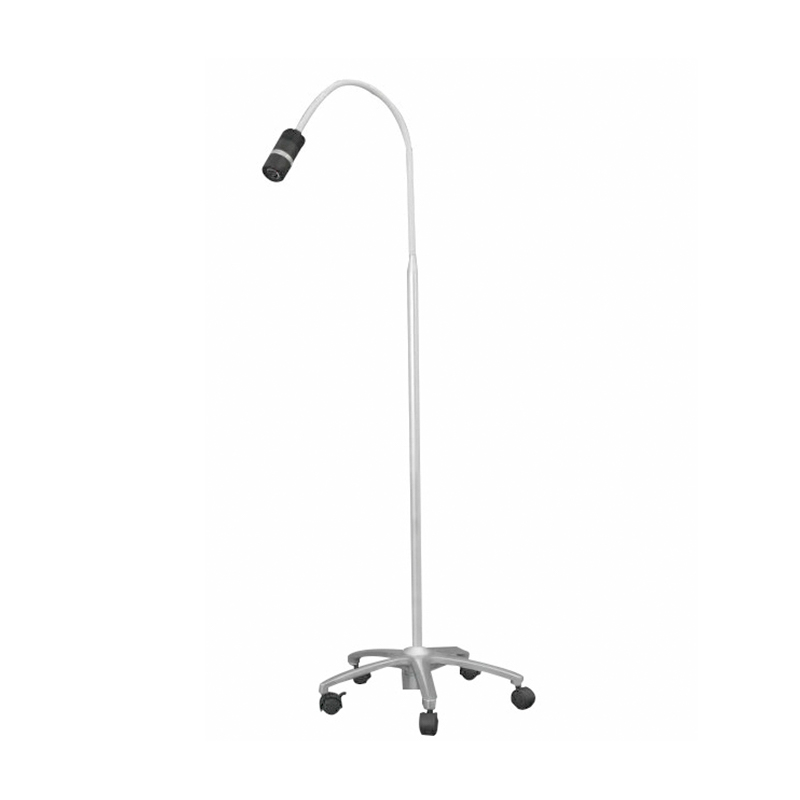
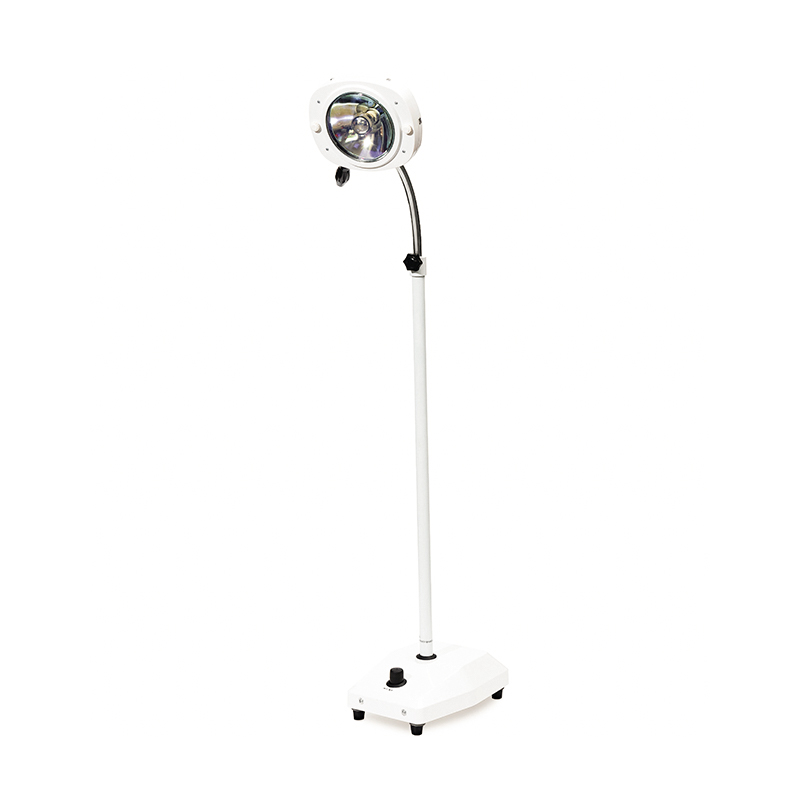
Examination lamps are manufactured in several configurations, each optimized for particular clinical environments. Choosing the correct type directly affects workflow efficiency and clinical outcome quality.
| Lamp Type | Mounting Format | Typical Illuminance | Primary Use Setting |
|---|---|---|---|
| Single-head floor stand | Mobile, castored | 1,000 – 5,000 lux | GP clinic, ward, ED bay |
| Double-head floor stand | Mobile, castored | 5,000 – 10,000 lux combined | Minor procedures, wound care |
| Wall-mounted arm | Fixed, articulated | 2,000 – 6,000 lux | Consultation rooms, treatment bays |
| Ceiling-mounted pendant | Fixed overhead | 3,000 – 8,000 lux | Gynecology, procedural suites |
| Portable / rechargeable | Handheld or tabletop | 500 – 2,000 lux | Home visits, rural clinics, triage |
When evaluating an examination lamp for clinical procurement, the following specifications determine whether the lamp is fit for its intended purpose:
This is the most critical specification. General examination requires a minimum of 1,000 lux at 1 m; minor surgical procedures require 3,000–10,000 lux at 0.5 m. Lamps should clearly specify the working distance at which the stated lux value is measured.
A CRI of Ra ≥ 90 is the minimum acceptable for clinical examination. For dermatology or wound assessment, Ra ≥ 95 is preferable to ensure accurate tissue color discrimination. Lamps with lower CRI values may cause clinicians to misread erythema, pallor, or cyanosis.
Most clinical examination lamps operate between 4,000 K and 6,500 K. Neutral white (4,000 K) is better suited for general assessment rooms, while cool daylight (6,500 K) improves contrast for fine tissue differentiation in specialist settings.
LED examination lamps produce 70–80% less radiant heat than equivalent halogen models, significantly improving patient comfort during prolonged examinations and reducing clinician fatigue from heat exposure in enclosed consultation rooms.
A clinical examination lamp should allow the head to be positioned at any angle across a 360° rotational range and reach at least 1.2–1.5 m from the mounting point, enabling the clinician to direct light precisely without repositioning the patient.
Examination lamps in clinical environments are classified as non-critical medical devices under standard infection control frameworks, but their surfaces—particularly handles, articulation joints, and lamp heads—require routine decontamination between patients. Design features that support infection control include:
Facilities should include examination lamp decontamination in their standard between-patient cleaning protocols, with particular attention to handle and adjustment knob surfaces that receive frequent hand contact.
 We have specialised in medical devices for 32 years.
Contact Us
 No 48 Xiaokan Rd, Shizhuang town, Jiangyin, Jiangsu, China
 sara@jsf-qx.com
 +86-18915253915
 +86-18861287595
+86-18915253915
+86-18861287595
+86-18915253915
Copyright @ Jiangyin Jianshifu Equipment Co.,Ltd.
 Custom Disinfection Equipment Manufacturers
China Disinfection Equipment Factory
Custom Disinfection Equipment Manufacturers
China Disinfection Equipment Factory
The information provided on this website is intended for use only in countries and jurisdictions outside of the People's Republic of China.


 English
  عربى
عربى