By Admin
Content
An operating light — also called a surgical light or shadowless lamp — works by projecting multiple beams of high-intensity, focused illumination from different angles simultaneously, so that the light rays converge on a single surgical field and cancel each other's shadows. The result is a bright, near-shadow-free work zone that gives surgeons an unobstructed, colour-accurate view of tissue, vessels, and organs throughout a procedure. Understanding exactly how this is achieved requires looking at the optical design, light source technology, thermal management, and control systems that modern operating lights rely on.
Unlike an ordinary room lamp, an operating light must satisfy simultaneous demands that would seem contradictory in everyday lighting: extremely high brightness without heat injury to the patient, perfect colour fidelity without visual fatigue for the surgeon, and deep penetration into cavities without casting shadows from hands or instruments. Every element of the fixture's design — from the number of individual light emitters to the curvature of the reflector bowl — is engineered around those requirements.
The core working principle of any operating light is what engineers call shadow-free or shadowless illumination. A single-point light source always produces a distinct umbra — the hard shadow cast when an opaque object blocks the beam. In a surgical setting, the surgeon's own hands and the handles of instruments would constantly obscure parts of the wound if only one light source were used.
Modern operating lights solve this by arranging dozens of individual LED modules or reflector segments in a circular or polygonal array. Each emitter points toward the same target zone from a slightly different angle. When one beam is blocked by an obstacle, the beams coming from other directions fill in the shadow zone. The more independent light paths converge on the field, the smaller and softer any residual shadow becomes. High-end operating lights may integrate 60 to over 100 individual LED chips distributed across a single dome, reducing shadow depth to less than 10 % of the illuminance at the centre of the field.
The geometry of the dome and each individual reflector cup is mathematically calculated so that all beams arrive at a common focal plane — typically between 70 cm and 140 cm below the lamp head — while still covering a usable surgical field diameter of 20 cm to 35 cm. This combination of focus depth and field width is described by the D10 and D50 values standardised in IEC 60601-2-41: D10 is the diameter within which illuminance stays above 10 % of the central peak, and D50 is the diameter within which it stays above 50 %.
The dominant light source in contemporary operating lights is the high-power LED (Light-Emitting Diode). An LED generates light through electroluminescence: when a forward voltage is applied across a semiconductor p-n junction, electrons recombine with holes and release energy as photons. The colour of the photons depends on the bandgap of the semiconductor material. White light for surgical use is most commonly produced in one of two ways:
LED-based operating lights routinely achieve lifespans exceeding 50,000 hours, compared to roughly 500–1,000 hours for the halogen bulbs they replaced. They also emit far less infrared radiation, which is the primary source of patient tissue drying in older halogen systems.
Two optical parameters are critically important for a surgical operating light. The Colour Rendering Index (CRI) — or more accurately the Ra and R9 values — describes how faithfully the light reproduces the colour of illuminated objects compared to a reference daylight source. Human tissue contains haemoglobin, which makes blood appear bright red, and differentiating between arterial and venous blood, healthy and ischaemic tissue, or cancerous and normal cells can depend on subtle colour differences. IEC 60601-2-41 requires a minimum Ra of 85; premium operating lights target Ra ≥ 95 and R9 (saturated red rendering) ≥ 85.
Colour temperature is expressed in Kelvin (K). The adjustable range for modern operating lights is typically 3,500 K to 5,000 K. Lower values (warmer, more yellowish white) are preferred by some surgeons for general procedures; higher values (cooler, closer to daylight) help differentiate tissue layers during microsurgery or neurosurgery. The ability to shift colour temperature without changing the overall illuminance level is a key functional advantage of multi-chip LED operating lights.
Each individual LED module in an operating light has its own miniature optical system. A typical arrangement consists of three layers working together:
The overall dome of the operating light is angled so that the individual module beams are not parallel to each other but converge at a point — the working distance — selected during the lamp's design. Premium products allow the clinician to adjust focus depth by moving a central lens cluster up and down, shifting the convergence point between roughly 70 cm and 140 cm without repositioning the entire fixture.
Illuminance — the amount of light falling on a surface — is measured in lux (lx). IEC 60601-2-41 sets the minimum central illuminance for a surgical operating light at 40,000 lux and the maximum at 160,000 lux. In practice, most operating theatre fixtures can be steplessly dimmed across a range such as 20,000 lx to 130,000 lx, allowing the surgical team to match brightness to the procedure type.
| Illuminance Range | Typical Application | Standard Requirement |
|---|---|---|
| 10,000 – 30,000 lx | Minor procedures, wound care, endoscopy support | Below IEC minimum for major OR use |
| 40,000 – 80,000 lx | General surgery, orthopaedic, obstetric procedures | IEC 60601-2-41 compliant range |
| 80,000 – 130,000 lx | Cardiac, neurosurgery, microsurgery | IEC 60601-2-41 compliant range |
| Above 160,000 lx | Not recommended — risk of tissue drying and glare | Exceeds IEC 60601-2-41 upper limit |
Importantly, the ratio of illuminance at the edge of the surgical field to the ambient room lighting must be carefully managed. An operating light that creates an extremely bright pool in a very dark room causes rapid pupil constriction and eye fatigue when the surgeon looks away from the field. This is why modern operating theatres maintain an ambient luminance of 1,000 lx to 2,000 lx around the table while the surgical field itself is lit to 80,000 lx or above.
Heat management is one of the most important engineering considerations for any operating light. The IEC standard limits the maximum irradiance (the heat load on tissue) to 1,000 W/m² measured at the centre of the light field at minimum working distance. For older halogen systems this was a genuine challenge, because incandescent and halogen lamps convert a significant portion of their energy into infrared radiation that travels with the visible beam.
LED operating lights address this in two ways. First, LEDs are intrinsically far more efficient at converting electrical power to visible light, so less energy is wasted as heat in the beam itself. Second, the heat that LEDs do generate is produced at the junction of the semiconductor chip rather than radiated forward into the light cone — it must be conducted away from the back of the chip through a thermal management system built into the lamp head. This typically involves:
The practical result of effective thermal management in a modern LED operating light is that the heat load on the patient's wound is drastically lower than with halogen: measurements typically show less than 150 W/m² at 1 metre working distance for a well-designed LED system, versus 400–700 W/m² for an equivalent halogen fixture.
An operating light must be adjustable during surgery without breaking the sterile field around the patient. Modern units integrate several control mechanisms to support this requirement:
A detachable, autoclavable sterile handle clips onto the lamp head, allowing a scrubbed surgeon or scrub nurse to reposition the light manually without contaminating their gloves on an unsterile surface. The handle transfers both rotational and translational movement to the lamp dome through a friction-damped joint that holds position without drift.
Illuminance level, colour temperature, and individual satellite lamp switching are typically controlled from a wall-mounted touchscreen panel operated by the circulating (unscrubbed) nurse. Stepless dimming is achieved by pulse-width modulation (PWM) of the LED driver current or, in flicker-sensitive applications, by analogue current reduction. PWM frequency is generally kept above 1,000 Hz to remain imperceptible to the human eye.
Many modern operating lights can integrate a high-definition camera module into the central hub of the lamp dome. Because the camera shares the same optical axis as the light, it captures a clear, shadow-free image of the surgical field that can be fed to monitors in the room, recorded for documentation, or streamed for remote consultation and surgical training. Some systems also support augmented reality overlay, where imaging data (ultrasound, fluoroscopy, MRI) is superimposed on the live surgical view.
Operating theatres commonly install either a single-dome or a double-dome (satellite + main) configuration. Understanding the working principle of each helps in selecting the right system:
In double-dome systems, the two lamp heads are independently dimmed and positioned, and their combined illuminance can exceed 200,000 lux at the convergence point — which is why the combined system is typically used at reduced individual brightness rather than maximum output.
The evolution from halogen to xenon to LED technology has transformed every measurable characteristic of the surgical operating light. The table below summarises the most clinically relevant parameters:
| Parameter | Halogen | Xenon | LED |
|---|---|---|---|
| Lifespan (hours) | 500 – 1,000 | 2,000 – 5,000 | 50,000+ |
| Colour Rendering Index (Ra) | 95 – 100 | 92 – 98 | 90 – 98 |
| Max Illuminance (lx) | 100,000 | 130,000 | 160,000+ |
| Heat load on patient (W/m²) | 400 – 700 | 200 – 350 | 50 – 150 |
| Colour temperature adjustable? | No | Limited | Yes (3,500 K – 5,000 K) |
| Sterile handle compatibility | Yes | Yes | Yes |
The mechanical mounting system is an integral part of how an operating light functions in practice. A ceiling-mounted pendant arm consists of a series of spring-balanced joints that allow the lamp head to be moved freely in three dimensions and to remain stationary wherever it is placed — without the surgeon needing to apply constant force or use locking levers.
Spring balancing is achieved through counterweighted horizontal arms and torsion springs at the vertical pivot joints. Each joint is tuned to the exact weight of the components it supports. Premium systems add electromagnetic brakes that engage automatically when the sterile handle is released, locking the lamp into position with sub-millimetre drift. This is especially important during long thoracic or spinal procedures where repositioning needs to be quick, precise, and permanent for the next 30–60 minutes without gradual drift.
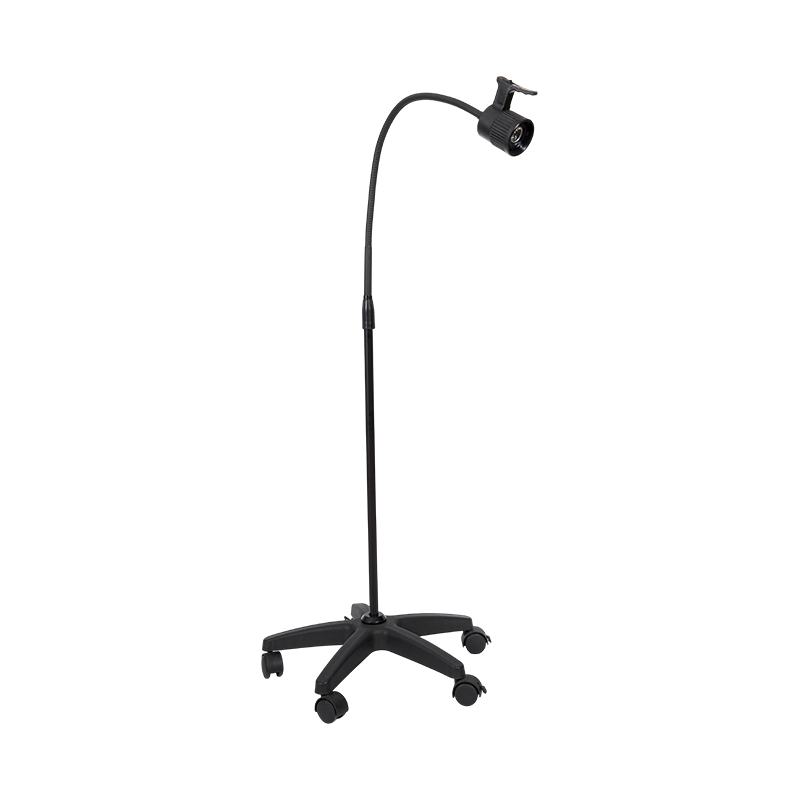
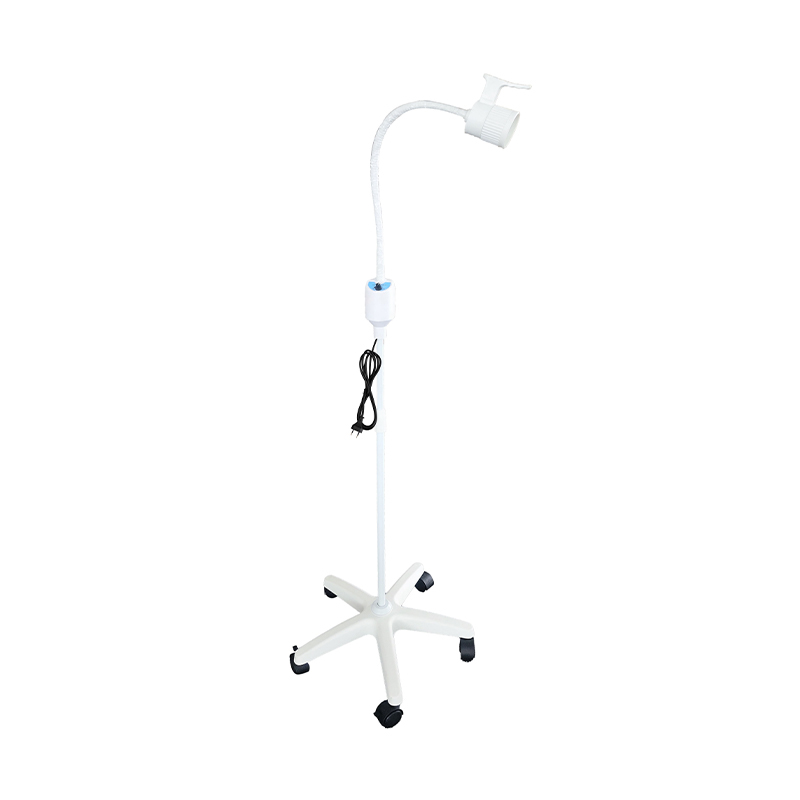
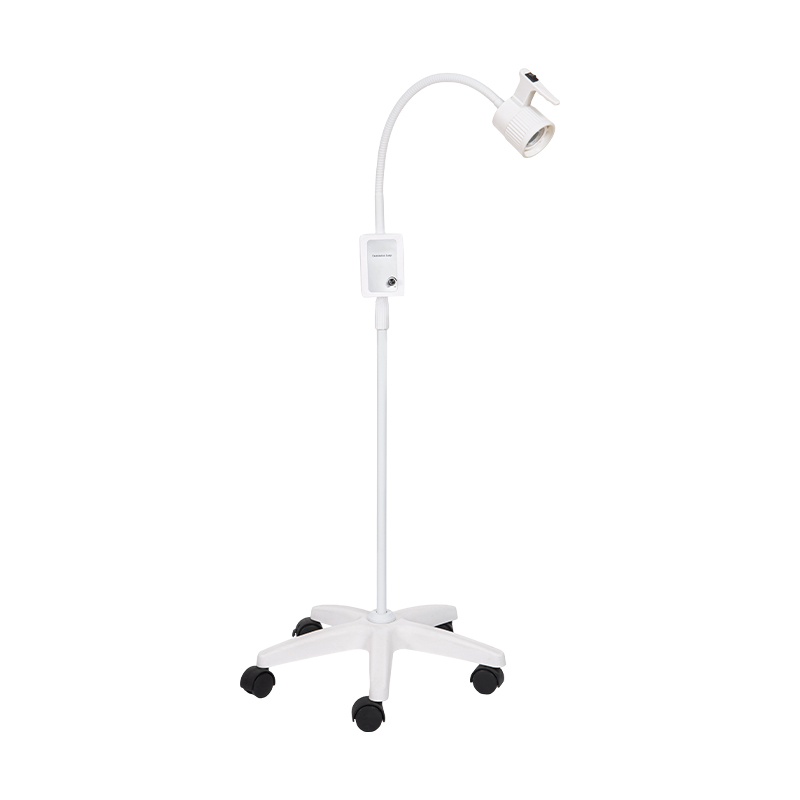
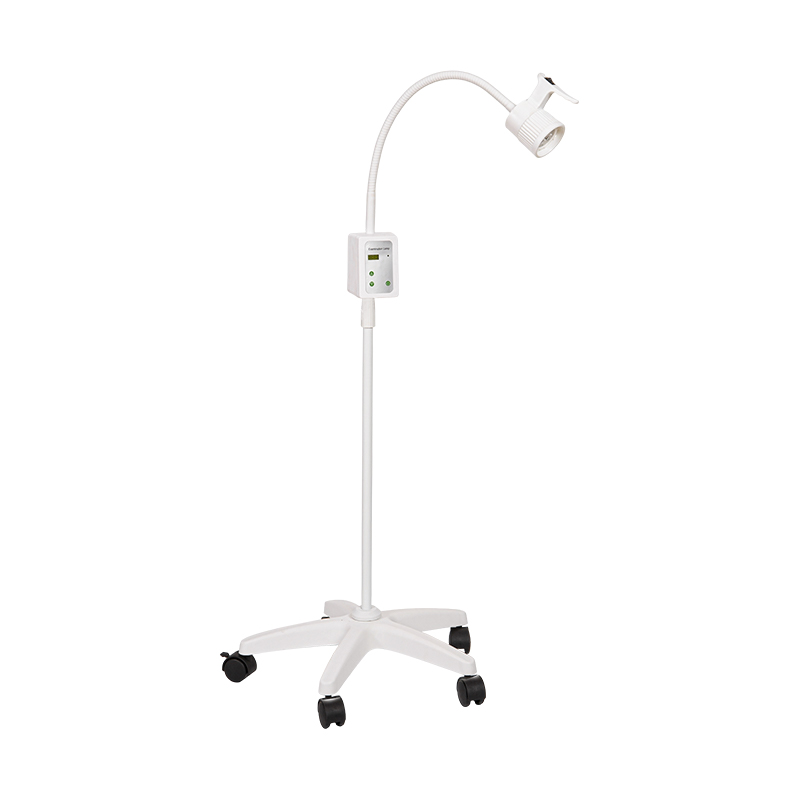
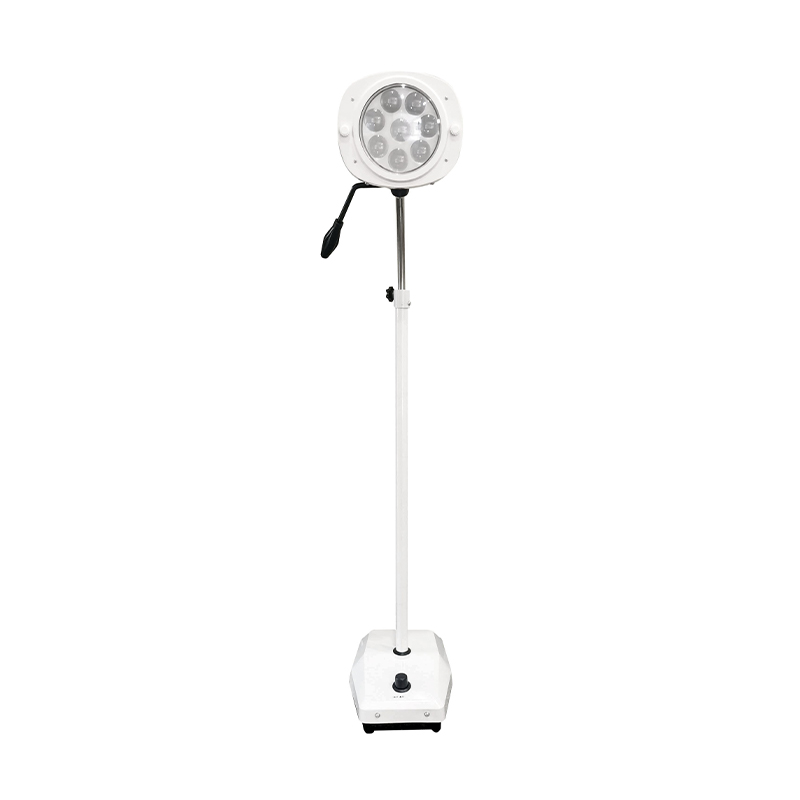
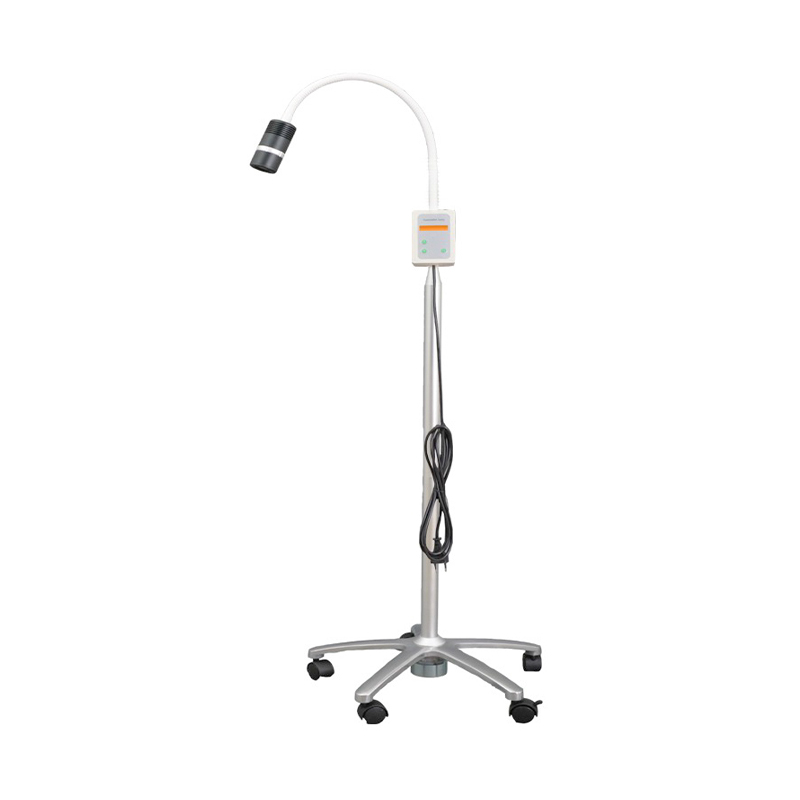
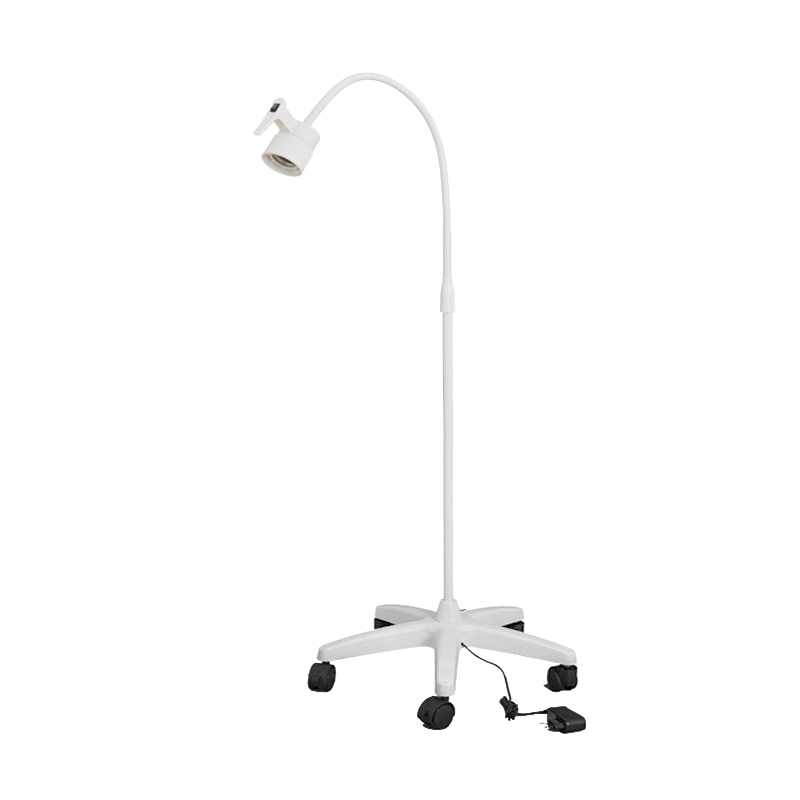
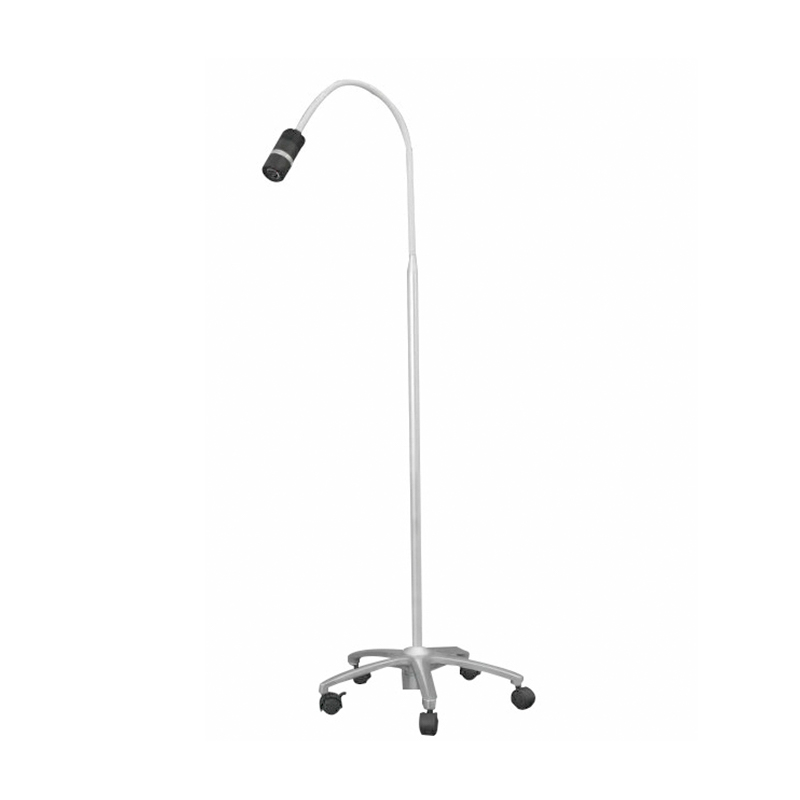
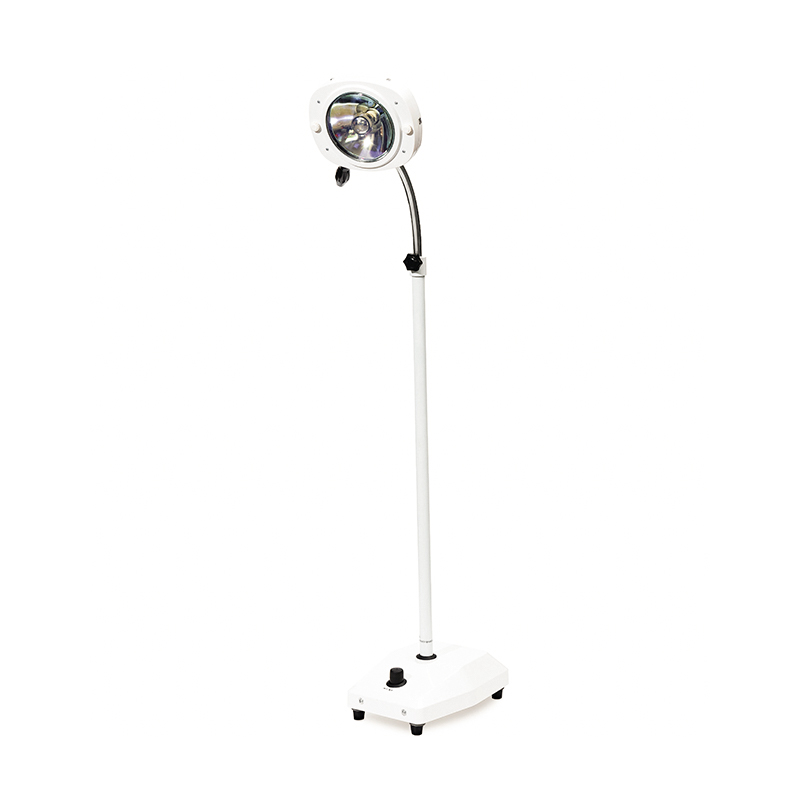
Wall-mounted and mobile (floor-standing on castors) operating lights follow the same articulation principles but offer reduced range of motion compared to ceiling-mounted systems. Mobile units are primarily used in procedure rooms, intensive care units, or as supplementary lighting during complex cases requiring unusual patient positioning.
An operating light installed in a sterile zone must withstand routine cleaning and disinfection without degradation of its optical or mechanical components. Lamp housings are typically rated to IP54 or IP65 under IEC 60529, meaning they are protected against limited dust ingress and water spray from any direction — important because the OR environment involves wet mopping, spray disinfectants, and condensation from patient irrigation.
Surfaces are smooth, without exposed screw heads or recesses that could harbour pathogens. The sterile handle assembly is fully autoclavable at 134 °C steam sterilisation cycles. The lens cover — the outer glass or polycarbonate panel across the face of the lamp dome — must be removable for cleaning and periodically inspected for scratching that would scatter light and reduce illuminance uniformity.
Because LED operating lights have no user-replaceable bulbs in the traditional sense, maintenance intervals are driven by gradual lumen depreciation rather than sudden failure. Most manufacturers define an end-of-life point at L70 — the time at which output has declined to 70 % of the initial value — which for a quality LED system occurs well beyond 40,000 operating hours under normal conditions. Preventive maintenance typically involves cleaning the optical surfaces, inspecting spring balance calibration, testing emergency backup circuits, and verifying that all LED modules are functioning within specification.
For hospital procurement managers and surgical department heads comparing operating light suppliers, the technical specification sheet is only the starting point. A rigorous evaluation should also address:
The working principle of an operating light combines multi-angle LED illumination, precision optical engineering, active thermal management, and sterile-compatible control systems to deliver the three properties surgery demands: high brightness, shadow-free coverage, and accurate colour rendering. Each of these properties is the result of deliberate design choices at the component level — from the geometry of individual reflector cups to the thermal conductivity of the PCB substrate — that compound into a reliable, clinically safe system.
For procurement teams evaluating operating light suppliers, the most important advice is to move beyond headline lux values and examine the complete optical specification: field diameter, shadow dilution ratio, CRI including R9, heat load, and colour temperature range. These parameters, tested against IEC 60601-2-41, tell the real performance story of any operating light and determine whether it will truly support the surgical team across the full variety of procedures and patient positions they encounter day to day.
 We have specialised in medical devices for 32 years.
Contact Us
 No 48 Xiaokan Rd, Shizhuang town, Jiangyin, Jiangsu, China
 sara@jsf-qx.com
 +86-18915253915
 +86-18861287595
+86-18915253915
+86-18861287595
+86-18915253915
Copyright @ Jiangyin Jianshifu Equipment Co.,Ltd.
 Custom Disinfection Equipment Manufacturers
China Disinfection Equipment Factory
Custom Disinfection Equipment Manufacturers
China Disinfection Equipment Factory
The information provided on this website is intended for use only in countries and jurisdictions outside of the People's Republic of China.


 English
  عربى
عربى